What Is an AI Employee? AI Agent, Chatbot or Digital Worker
What is an AI employee? A plain definition, vendor wording, how it differs from an AI agent, chatbot, digital worker or AI worker, and an approval-level test.
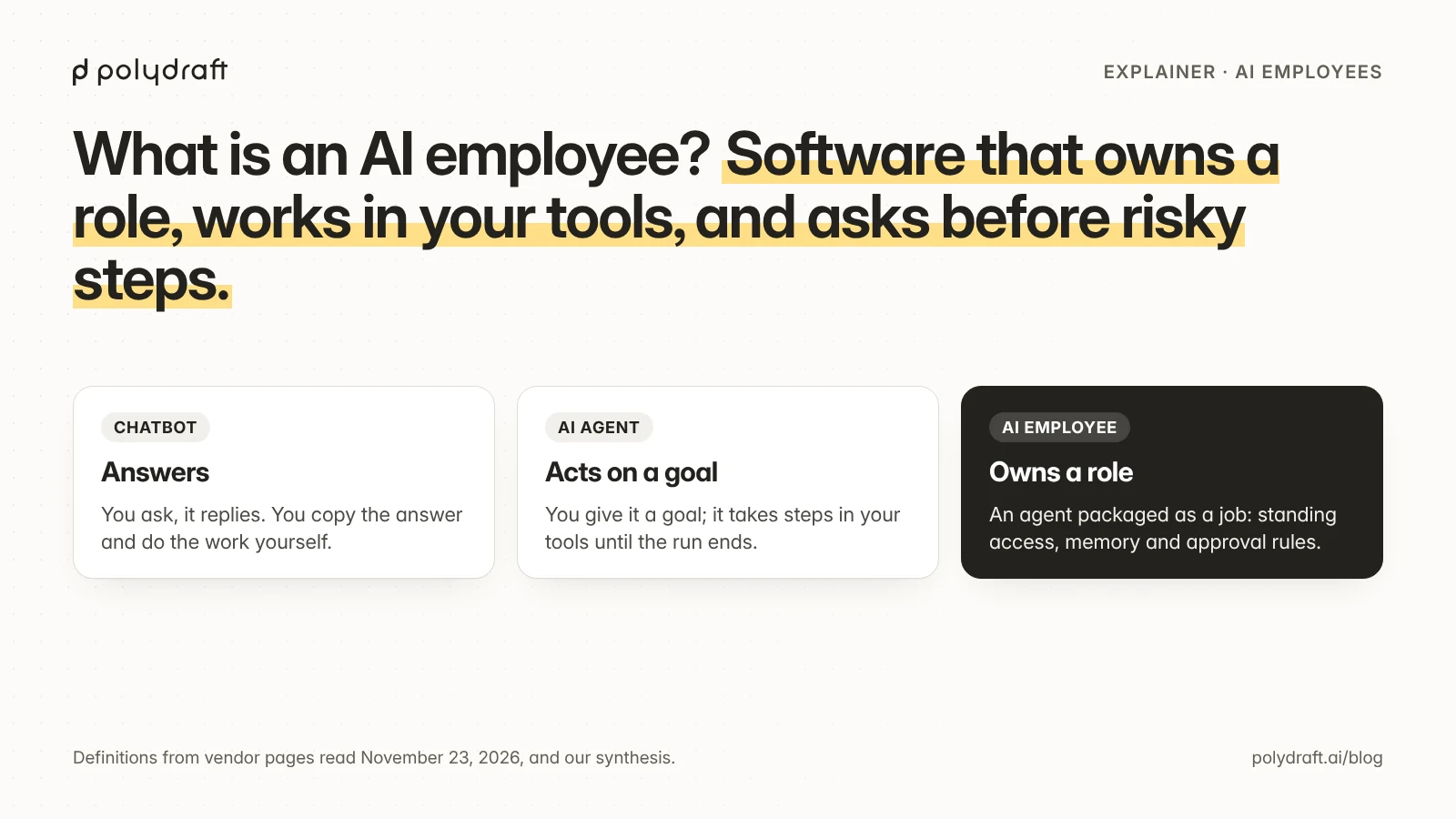
An AI employee is software given a whole role, such as running the inbox or the blog, that works inside your business tools without being prompted for each step. What separates it from a chatbot is that it acts. What separates it from a plain AI agent is packaging: standing access to your systems, memory of your business, and rules for which actions wait for your approval. The label is marketing. The approval rules are what you are buying.
That definition is ours, built from how the vendors who sell AI employees describe them. Below we quote those vendors word for word, as read on their own pages on November 23, 2026. Then we compare five things with similar names: chatbots, copilots, AI agents, AI employees and RPA "digital workers". We add a search-demand chart from our own keyword data and an approval-level test you can apply to any product.
This guide is for owners and managers who keep hearing the term and want to know whether it means anything. We make PolyDraft, an agent for one job (the website and its SEO), so we have an interest in this category; our product appears once, in a labeled note. For a list of products and prices, see our comparison of AI employees by role.
Updated November 23, 2026: we corrected the Copilot price, restated the "ai employee" search trend as flat year on year and added how vendors use "AI worker".
Key points
- An AI employee is an AI agent sold as a role. Even one vendor that sells them says it "is largely an agent underneath".
- The useful differences are four: the scope of the role, what it may do without approval, which tools it can touch, and the unit you pay for.
- "Digital worker" has two meanings. Some AI employee vendors use it as a synonym. Older automation software used it for scripted bots.
- US searches for "ai employee" were 2,900 in October 2026, the same as a year earlier. The most-searched synonym is "ai worker". Searches for "ai coworker" grew from 90 a month in November 2025 to 480 in October 2026.
- Before you buy, find out which actions wait for your approval and who can change that rule.
What is an AI employee? A plain definition
An AI employee is an AI agent assigned to an ongoing job instead of a single request. It logs into the tools that job uses, starts work when something happens or on a schedule, remembers your business between tasks, and hands back finished work. Most vendors also promise that risky actions wait for a person.
Three parts of that definition come straight from vendor pages. The rest is our reading of what they have in common.
- It does the work, not just the talking. Viktor's page says "An AI employee is software that logs into your company's tools and does the work, not a chatbot you supervise" (Viktor).
- It owns a role. Marblism's guide calls it "software assigned to a named role and left to run that role without being asked" (Marblism).
- It checks in before irreversible steps. The same guide says "an honest AI employee keeps a human approval step on anything irreversible".
What it is not: a person, a guarantee of output, or a product category with a standard. No body defines the term. Two products sold as AI employees can differ more than an AI employee and an AI agent do.
How an AI employee works, step by step
The vendors describe the same loop. Each step below quotes a vendor page read November 23, 2026; the order is our summary.
- Access. You connect the tools the role uses. Viktor's product "logs into your company's tools".
- Trigger. Work starts on an event, a schedule or a request. Marblism's AI employees "start work on their own when something happens, like an email arriving or a call coming in" (Marblism). Viktor's coworker page says you "@mention it in Slack or Microsoft Teams" and that it "works proactively on schedules" (Viktor).
- Context. It uses what it knows about your business. Marblism says its AI employees "remember your business from one job to the next".
- Draft or act. It "takes actions and hands back finished work" (Viktor).
- Approval. Risky steps wait. At Viktor, "anything irreversible, like emailing customers or deploying code, waits in the thread for someone to approve it".
- Report. It "reports back with the result" (Viktor's FAQ). Check whether that report is a full log of actions or only a summary.
Step 5 is where products differ most; the approval-level test below sorts them.
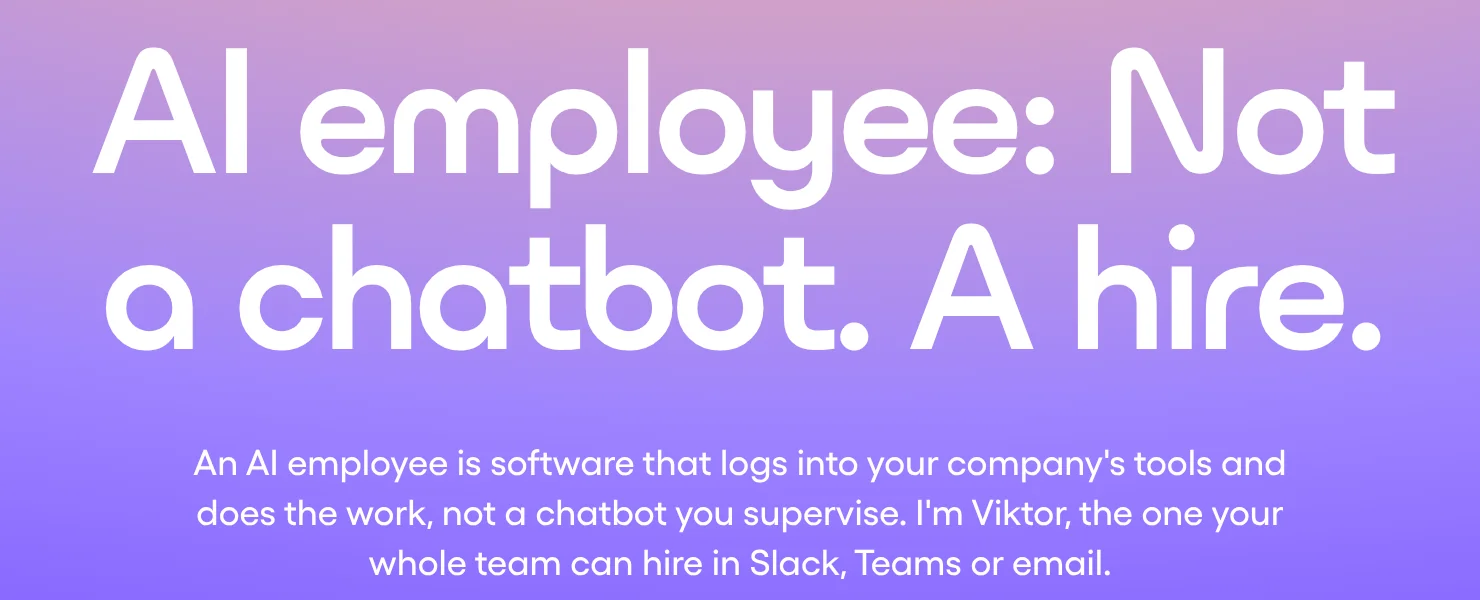
Viktor's AI employee page, captured November 23, 2026. Vendor claim.
How vendors define an AI employee, in their own words
Vendors agree that the software acts, and disagree on almost everything else, including whether to use the term at all. These are the definitions on each vendor's own page, read November 23, 2026.
| Vendor | Term it uses | Definition, verbatim |
|---|---|---|
| Viktor | AI employee | "Unlike a chatbot that answers questions, an AI employee takes actions and delivers finished output, without you scripting every step." |
| Lindy | AI employee | "Lindy is the AI employee that plugs into your tools, learns how you work, and takes real work off your plate." |
| Marblism | AI employees | "AI employees are software that each own a whole job in your business, such as answering your phone, running your inbox or posting on social media." |
| GoHighLevel | AI Employee | "...with a goal-oriented AI Employee personalized to your business and your customers." |
| Fin | Customer Agent | "A Customer Agent is a single AI agent that works across the entire customer journey..." |
| Zendesk | AI agents | "AI agents for customer service go beyond scripted chatbots." |
| Artisan | AI employees (home page), AI sales agent | "An AI sales agent is AI-powered software that uses artificial intelligence and machine learning to automate the outbound sales process..." |
Two signals stand out. First, support vendors (Fin, Zendesk) describe the same kind of product as "AI agents", not employees. Second, the label moves. Artisan's home page reads "Your entire GTM, powered by AI employees", yet its definition is for an "AI sales agent". 11x calls its products "AI sales agents" only. Motion's pages we read on November 23, 2026 do not use the phrase at all; its /ai-employees address leads to the home page.
Marblism's guide also names the synonyms. In its words, an AI employee is "also sold as a digital worker, an AI worker or AI staff".
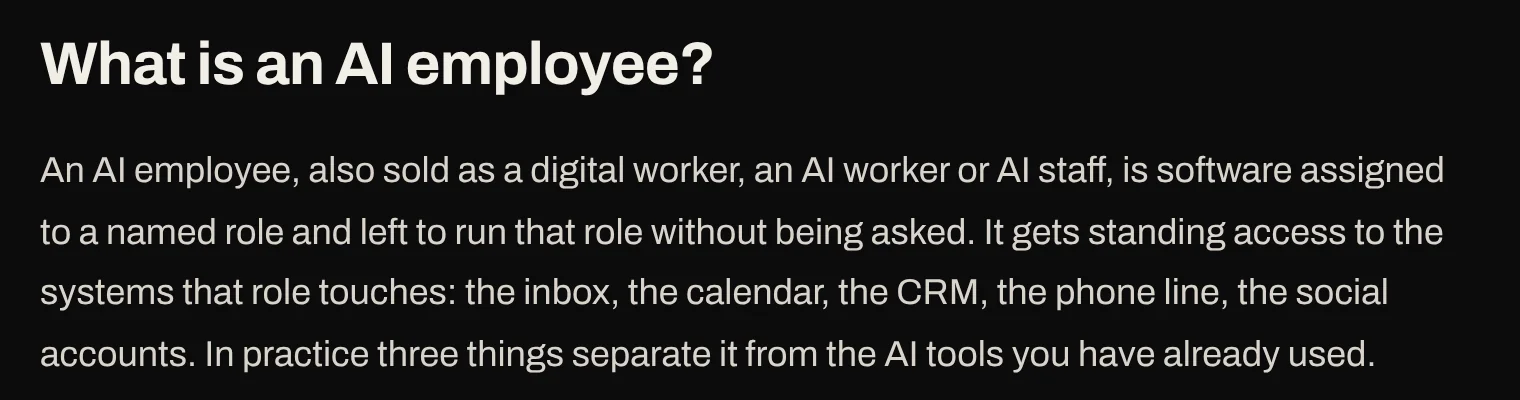
Marblism's "What is an AI employee?" guide, captured November 23, 2026, cropped to the paragraph. Vendor claim.
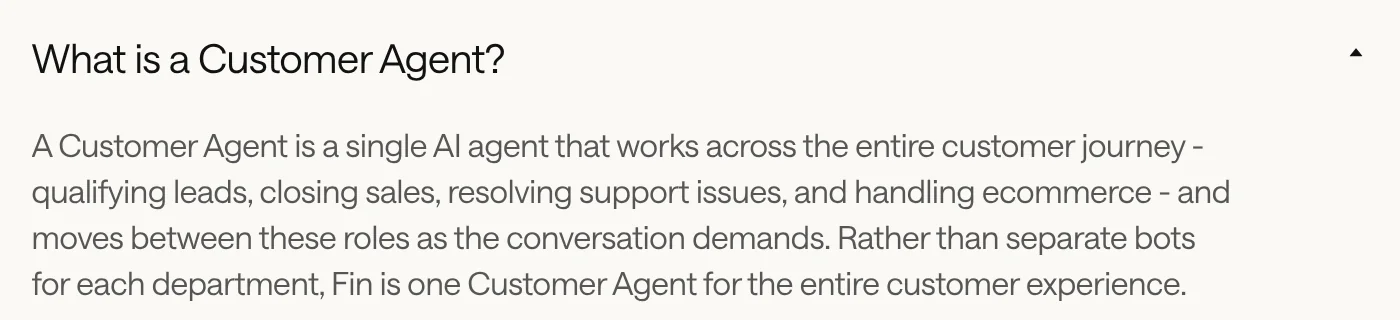
Fin's Customer Agent FAQ, captured November 23, 2026. Fin uses "AI agent", not "AI employee", for a product that owns a customer-facing role.
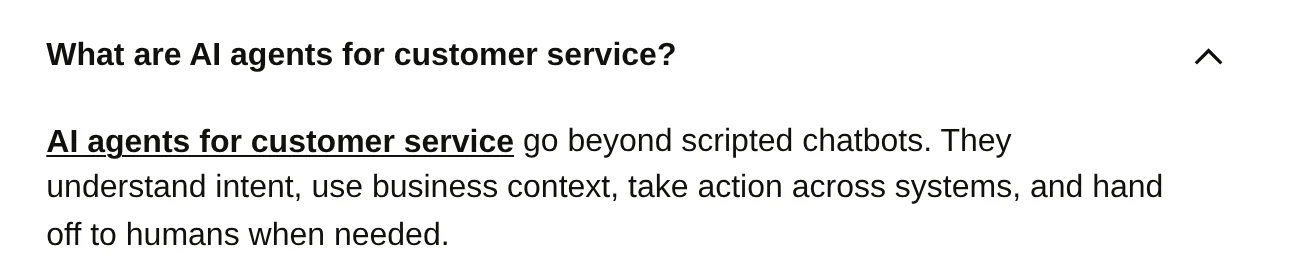
Zendesk's AI agents FAQ, captured November 23, 2026. Vendor claim.
AI employee vs AI agent vs chatbot vs copilot vs digital worker
The five differ on who starts the work and what the software may do alone. In the table, text in quotation marks is vendor wording from the page named in brackets. Unquoted text is our synthesis. The RPA column is general background: none of the pages we captured describes that meaning.
| Chatbot | Copilot or assistant | AI agent | AI employee | Digital worker (RPA sense) | |
|---|---|---|---|---|---|
| Who starts the work | "You, every time" (Marblism, chatbots and assistants) | You, inside the app you are using | "You, once per goal" (Marblism) | "What happens in your business" (Marblism); a request in Slack or Teams (Viktor) | A schedule or trigger a developer set up |
| Tools it can use | None of yours: "You copy its answer and do the work" (Viktor) | The one app it is built into | "take action across systems" (Zendesk) | "logs into your company's tools" (Viktor) | The screens and systems it was scripted for |
| Memory and context | "Usually just the conversation" (Marblism) | The open record or document | "One run at a time" (Marblism) | "Remembers your team, tools and preferences" (Viktor) | None beyond its script and data |
| What it may do without approval | Reply; it changes nothing in your systems | Draft "text you still have to act on" (Viktor) | What its configuration allows | Reads and drafts; "Anything irreversible waits for your approval" (Viktor) | Whatever the script does; exceptions go to people |
| How it is priced | "Usually per seat" (Viktor) | Per seat: Intercom's Copilot add-on is "$29 per agent/month billed annually, or $35 per agent/month billed monthly" (Intercom, as of November 23, 2026) | "Priced by usage" (Marblism); per outcome at Fin and Zendesk | Per workspace, per user, per bundle or per account (see below) | Varies; not covered by our captures |
| Typical example | A chat box answering FAQs on a website | A reply drafter inside a helpdesk inbox | Fin's Customer Agent resolving a support conversation | Marblism's SEO role "Penny"; Viktor in Slack | A bot copying invoice fields into accounting software |
The short version: a chatbot answers, a copilot drafts inside one app, an agent acts on a goal, and an AI employee is an agent kept on a job. An RPA digital worker follows a script and does not reason about what to do next.
Two vendor tables make the same cut from the seller's side. Viktor compares three products on who does the work, setup, change handling, memory and pricing. Marblism adds automation tools and a human hire. Both tables are marketing, so read the AI employee column as the vendor's claim about its own product.
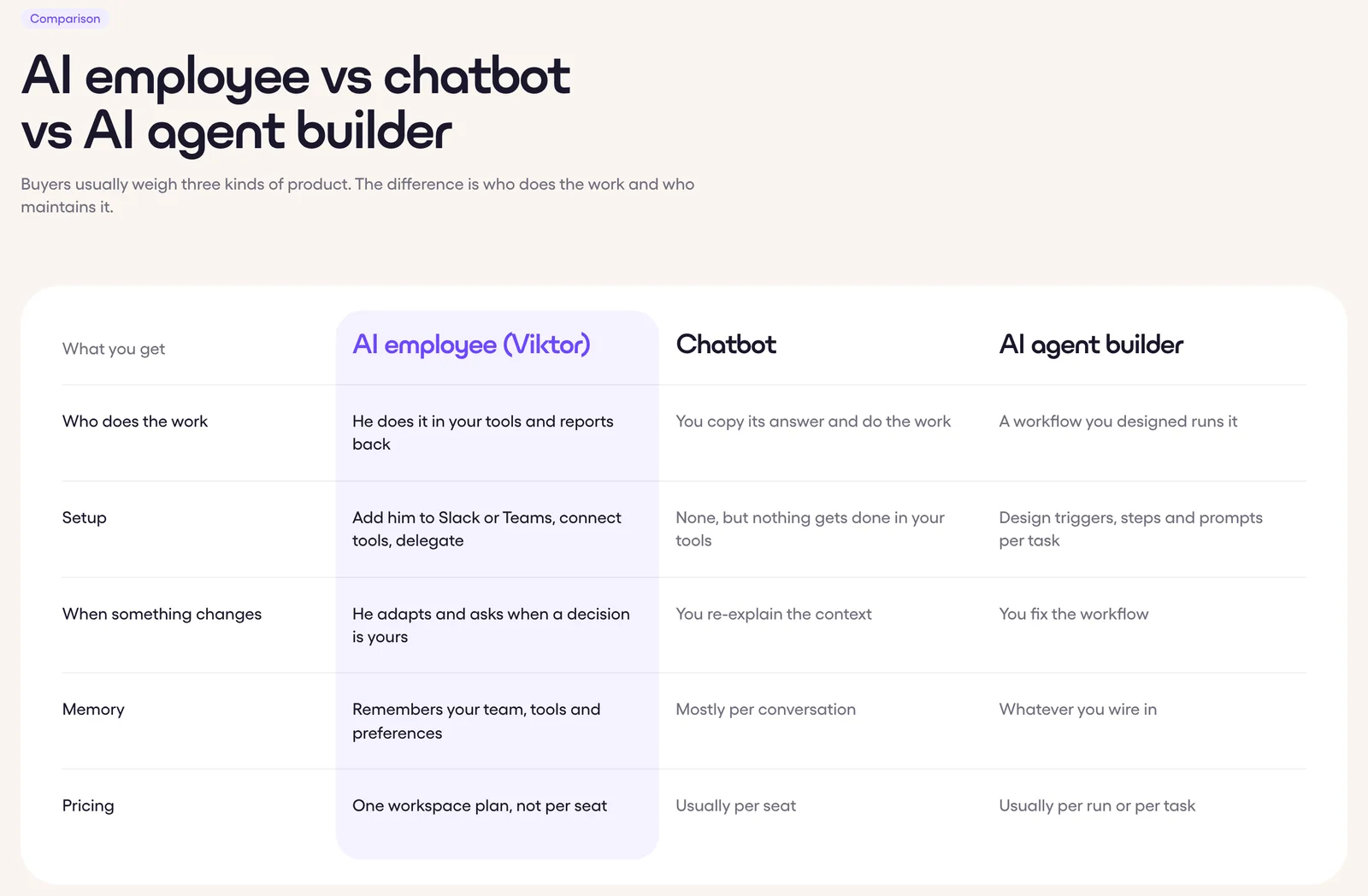
Viktor's comparison table, captured November 23, 2026. The AI employee column describes Viktor's own product. Vendor claim.
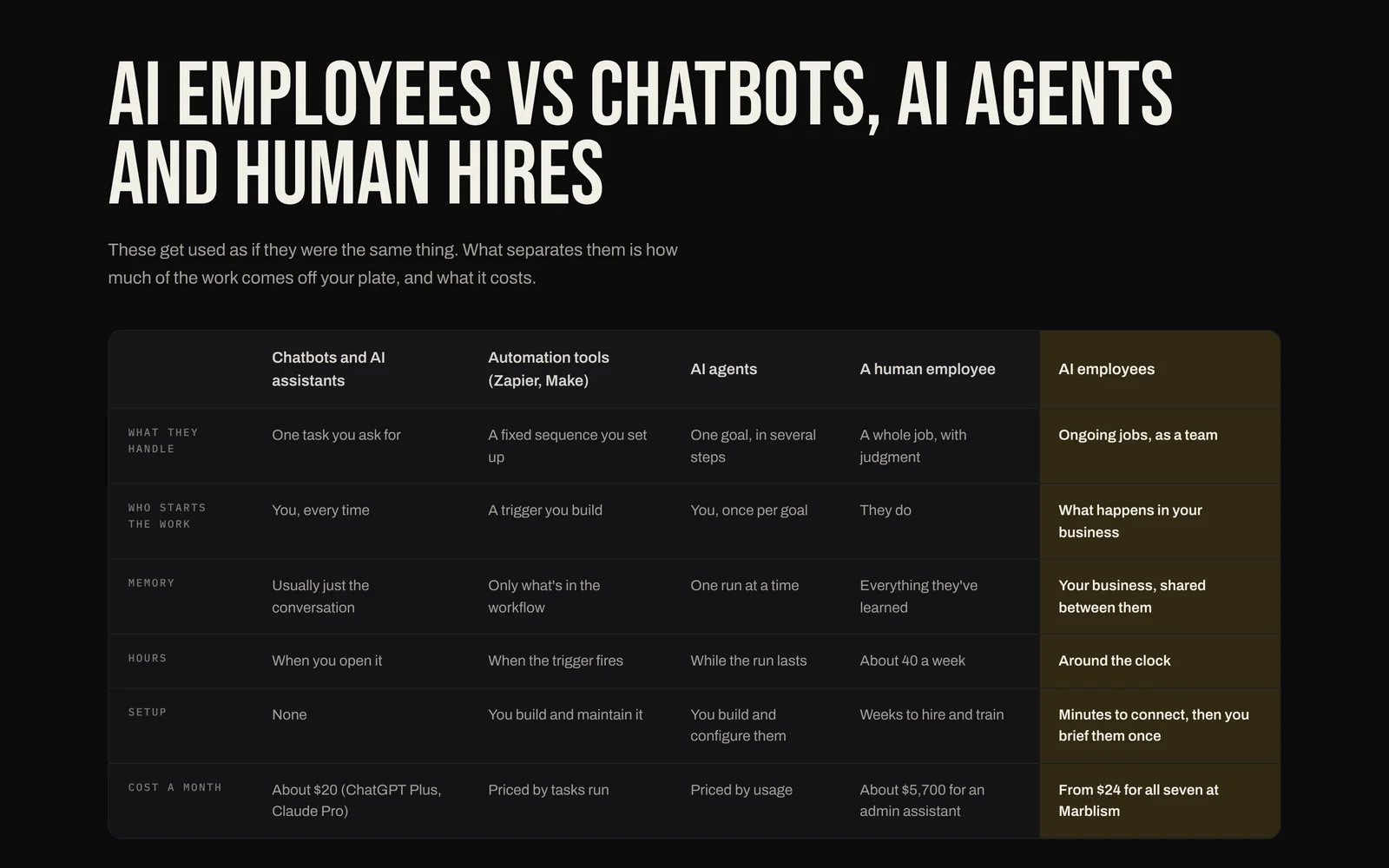
Marblism's comparison table, captured November 23, 2026. Vendor claim; the "$5,700 for an admin assistant" figure is Marblism's, and we did not check it.
The four things that actually differ between AI employees and agents
Strip the naming away and four properties decide what you are buying. These are what to compare between any two products, whatever they call themselves.
1. Scope of the role
The defining claim is that an AI employee owns a job, not a task. Marblism's table puts it as "Ongoing jobs, as a team" against "One goal, in several steps" for AI agents. In practice, scope means a written list of what the role covers and what it never touches. A narrow role (answer inbound calls, draft blog posts) is easier to check than a broad one (do real work across all your tools). Ask for the list.
2. Autonomy and approvals
This is the property that matters most, and vendors handle it differently. Lindy's rule is that "Anything with outside impact waits for your OK, until you tell me to go ahead". Viktor's documentation says an action that needs approval "runs only after someone clicks Approve". It adds that "Tools set to forbidden never run, even if someone asks" (Viktor approvals). GoHighLevel's Suggestive Mode drafts a reply "without sending that response automatically" (GoHighLevel help). At the other end, Artisan's sales agent is "Fully autonomous by default", with approvals available at any stage (Artisan).
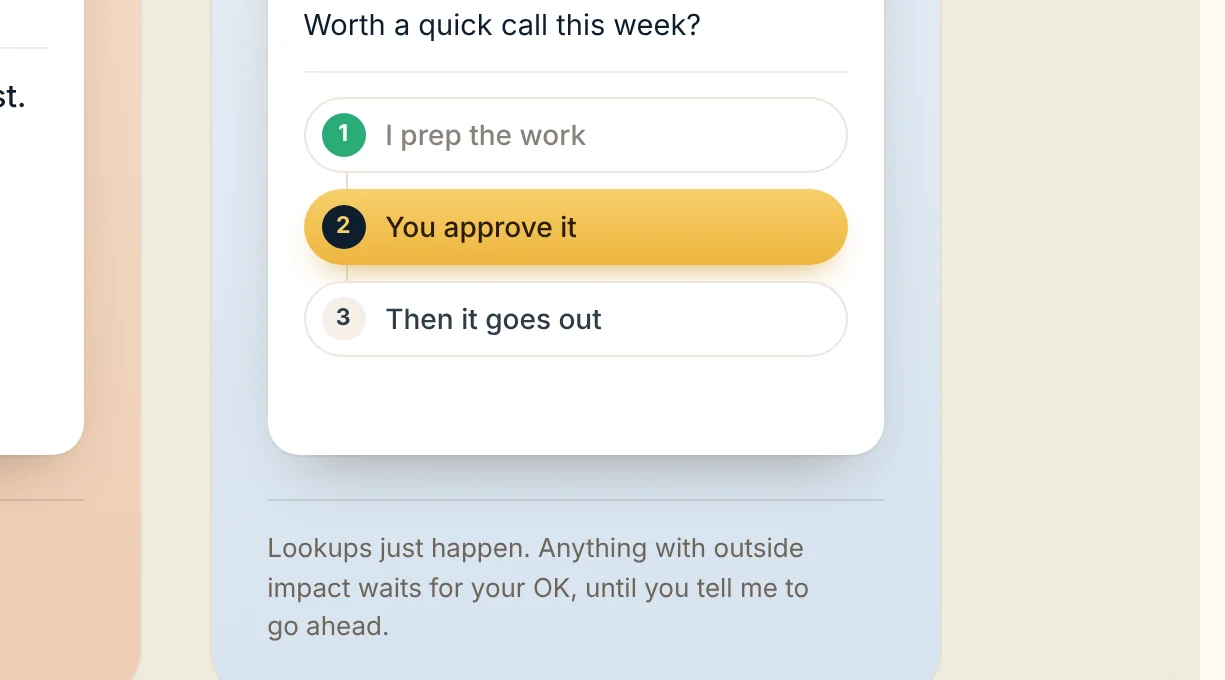
Lindy's approval card on its home page, captured November 23, 2026. The edge of the neighbouring card is visible at left. Vendor claim.
3. Tools and permissions
An AI employee is only as safe as the access you give it. Viktor's permissions page lets admins choose "Preview first", which shows a reply privately "with Post and Reject buttons, before the channel sees it", or "Auto-send" (Viktor permissions). Its FAQ adds that "Admins decide who can use him and which tools need approval". Look for three controls: per-tool access, an admin-only switch for those settings, and a log of what the software did. The same checks apply when you connect your own AI assistant to business tools; our guide to the best MCP servers for marketing and website work separates servers that only read data from those that can publish changes.
4. The pricing unit
AI employees are not priced like staff, and the unit you pay for shapes your bill more than the headline price. The vendors above use five different units, as stated on their own pages on November 23, 2026:
| Pricing unit | Vendor example (own page) | Your bill grows with |
|---|---|---|
| Credits, per workspace | Viktor: "40,000 shared credits monthly" on the Team plan | How much work you ask for |
| Credits, per active user | Lindy: "Every active user in your workspace is billed" | Headcount and usage |
| One bundle of roles | Marblism: seven named roles, "Unlimited team members" and "50h of work" on one plan | Mostly flat; check what happens past the plan's hours |
| Add-on, per client account | GoHighLevel: AI Employee plans priced "per sub-account", on top of a platform plan | The number of client accounts |
| Per outcome | Fin ("PER OUTCOME") and Zendesk ("pricing based on the successful outcomes they deliver") | Conversation volume |
Credit pricing is the hardest to predict, because it grows with how much you ask for. Credits work the same way in GTM data tools; our Clay pricing guide shows how a credit meter turns into a monthly bill. For each product's free option and cheapest plan, see our comparison of AI employees by role.
GoHighLevel's own pricing page adds a useful caution in its disclaimer. It reads: "References to “AI Employee,” “automation,” or “unlimited” features describe platform functionality and access only". It also says AI features "require setup, configuration, and ongoing human oversight."
An approval-level test for any AI employee or agent
Ask one question of any product: what may it do without a person clicking approve? Then place it on this scale. The levels are our rubric; the examples for levels 1 to 4 quote vendor pages read November 23, 2026.
| Level | What it may do alone | Vendor example | What to ask |
|---|---|---|---|
| 0. Answers | Reply in a chat; changes nothing | A website chatbot | Where do its answers come from? |
| 1. Drafts | Prepare work; a person sends it | GoHighLevel Suggestive Mode: drafts "without sending that response automatically" | Who reviews drafts, and how fast? |
| 2. Acts after approval | Take real actions, each approved first | Lindy: "Anything with outside impact waits for your OK"; Marblism's Penny: "You review and approve every draft before it goes live" | Which actions count as "outside impact"? |
| 3. Acts within rules | Act alone inside limits you set, and report | Viktor: approval for "anything irreversible", routine updates "on his own"; Penny can "publish on a set schedule automatically" | Who can change the limits, and is there a log? |
| 4. Autonomous by default | Act alone unless you add approvals | Artisan: "Fully autonomous by default" | What does it do on day one before you configure it? |
Most products can sit at more than one level, depending on settings. Write down the level for each action that matters to you: sending email, publishing, spending money, changing records. Start new software at level 1 or 2 and move up only after you have read its work for a few weeks. Artisan's own FAQ describes that path: "Most teams start with approvals enabled, then go fully autonomous once they trust Ava's judgment."
Our guide on how to use AI agents in SEO applies the same idea to one job, with review steps for each task.
Digital worker, digital employee, AI coworker, AI teammate: the synonyms
These names mostly mean the same thing as "AI employee", with one exception: "digital worker" also has an older automation meaning. Searchers use all of them. Our DataForSEO data for the US was retrieved on November 23, 2026. Its 12-month averages are 2,900 searches a month for "ai worker" and 1,600 for "ai employee". Next come "digital worker" at 590, "digital employee" at 320, "ai coworker" at 260 and "ai teammate" at 140.
The trend differs by term. Searches for "ai employee" were 2,900 in October 2026, the same as in October 2025. In between they fell to 1,900 in November 2025 and 1,000 in June and July 2026. So the rise in the chart is a recovery, not year-on-year growth. Searches for "ai worker" reached 4,400 in September and October 2026, up from 2,900 in October 2025. Searches for "ai coworker" grew from 90 to 480. Searches for "digital employee" peaked at 880 in December 2025 and were down to 140 by October 2026. The "digital worker" figure moved between 390 and 1,000 and was 590 in each of the last three months. For scale, "ai agents" averaged 60,500.
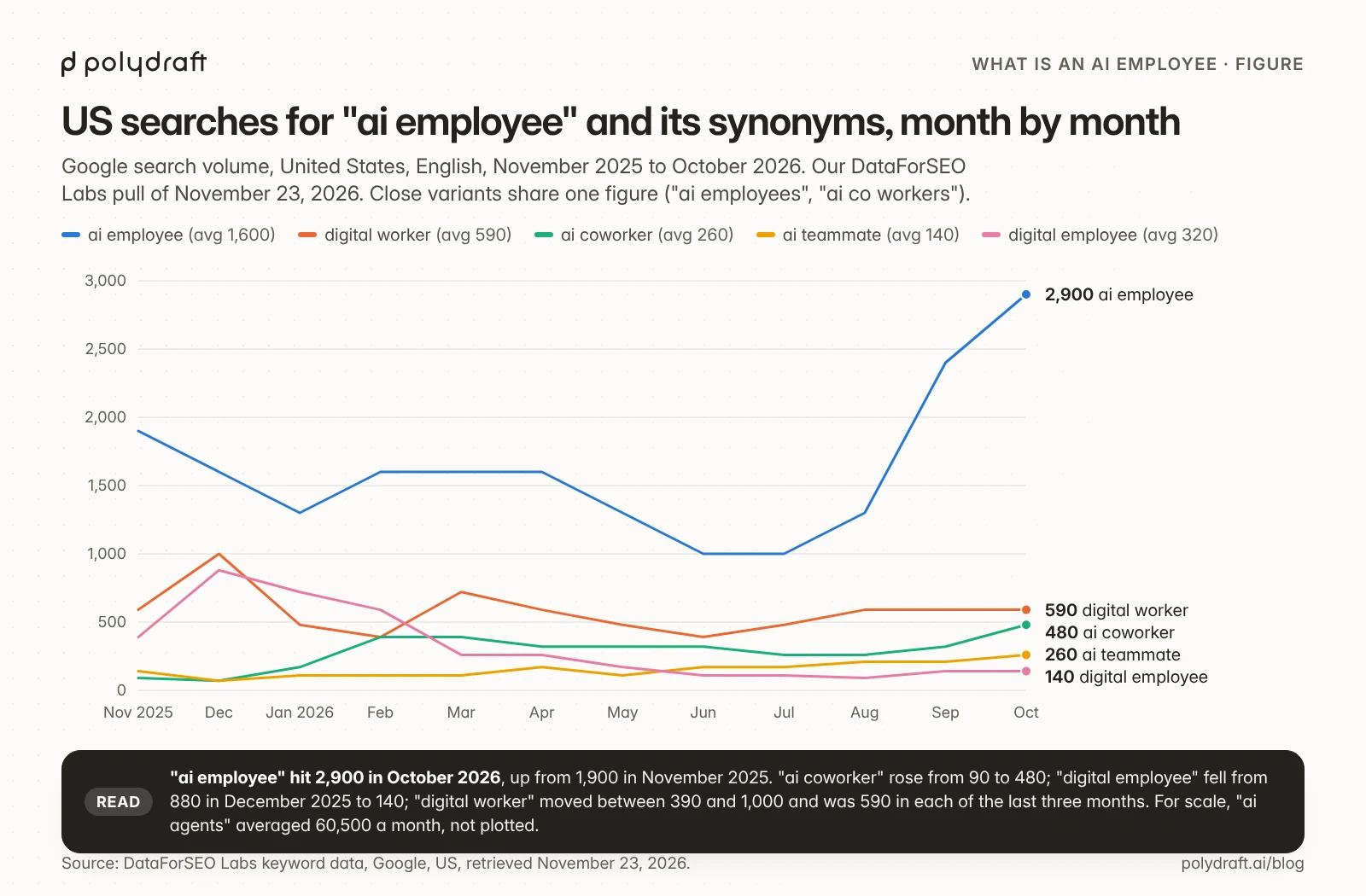
Our chart from DataForSEO Labs keyword data, Google, United States, English, retrieved November 23, 2026. Close variants share one figure: "ai employees" equals "ai employee" and "ai co workers" equals "ai coworker". The chart starts in November 2025. In October 2025 "ai employee" was also 2,900, so it is flat year on year. The "ai worker" series is not charted.
AI coworker and AI teammate. These stress working alongside people in shared channels. Viktor's coworker page says "You @mention it in Slack or Microsoft Teams like a human colleague, and it goes and does the thing" (Viktor). Lindy's pricing page calls its product "The teammate that punches above its price." Neither term implies more or less autonomy than "AI employee".
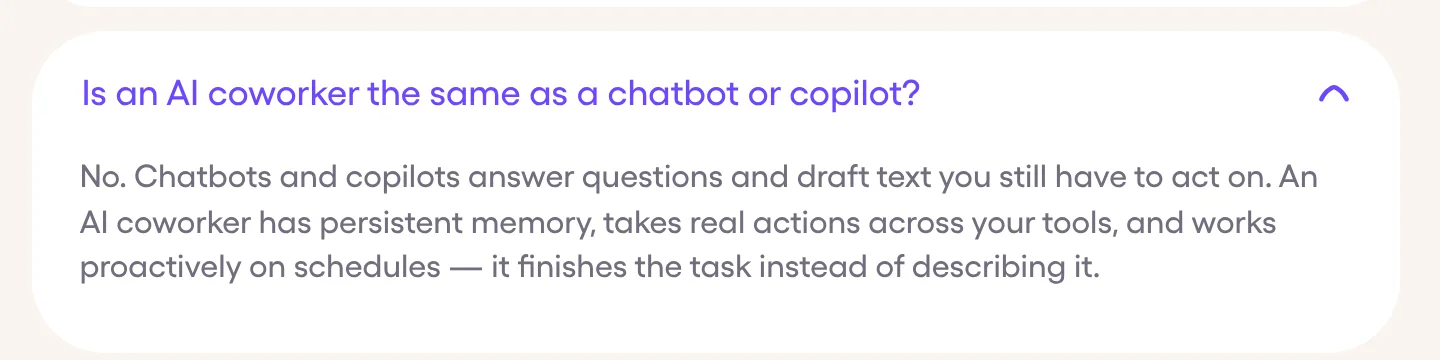
Viktor's AI coworker FAQ, captured November 23, 2026. Vendor claim.
AI worker. The most-searched of these names, and vendors use it as a plain synonym. Marblism's home page says "AI employees, AI workers and AI staff are different names for the same thing" (Marblism). Viktor's FAQ asks "Is an AI worker the same as an AI employee?" Its answer: "People use both words for the same idea: software that does work rather than answering questions." It adds that an AI employee is "the fuller version", with "his own logins to your tools" (Viktor). So treat an AI worker as the same category and apply the same approval test. The phrase is broad, so not every search for it is about software sold as a role. We did not measure that share.
Digital employee. Used the same way as AI employee. Marblism's guide lists "a digital employee" among labels that "are used interchangeably across the industry". Searches for the phrase also include unrelated HR topics, such as digital employee ID cards and recognition platforms, which our keyword data shows as separate queries.
Digital worker, new meaning. Marblism's guide lists it as another name for an AI employee: one is "also sold as a digital worker, an AI worker or AI staff".
Digital worker, older meaning. In robotic process automation (RPA), "digital worker" has long described a software bot that follows a fixed script across screens and systems. That is general background, not a claim from any page we captured. Our keyword data shows people still search it that way, in small numbers: "digital worker rpa", "rpa digital worker" and "digital worker vs bot" each average about 10 US searches a month. The practical difference is judgment. An RPA bot repeats exact steps and stops on anything unexpected. An AI agent decides its next step from the goal, which makes it flexible and harder to predict.
So, digital worker vs AI agent: if the product reasons from a goal and drafts or acts in language, it is an AI agent, whatever it is called. If it replays recorded steps, it is RPA.
Are AI employees worth it? When to use one and when not to
An AI employee is worth trying when you have a repeated, written-down job that a person reviews anyway, and when a mistake can be caught before it reaches a customer. It is a poor buy for judgment-heavy work, for jobs you cannot describe, or where no one has time to review its output.
Signs it can work:
- The job repeats weekly or daily: answering the same questions, drafting follow-ups, publishing articles, cleaning CRM records.
- You can write the rules down, including what it must never do.
- Someone already checks this work, so approving drafts adds little time.
- The product's approval level fits the risk. Level 2 for anything customers see is a sensible start.
Signs to wait:
- The work is mostly judgment, negotiation or relationships.
- A wrong action is costly and hard to undo, such as payments, legal documents or bulk email to customers.
- No one owns the review. Unread drafts are not saved time.
- The price unit does not match your usage. Per-user pricing for a large team, or credits for unpredictable volume, can cost more than expected.
Marblism's own guide is frank about the trade. It says an AI employee "is largely an agent underneath, and it is fair to be cynical about the renaming". It argues the packaging is what you pay for, and that its value "depends entirely on whether you were ever going to do the configuring yourself." That is a fair test. If you would set up an agent yourself, a general agent tool may cost less. If you would not, the packaged role is the product. A third route is paying someone to set it up; our guide to what an AI automation agency sells and charges prices that option. If you want a person on staff who builds these systems rather than software that runs them, see what a GTM engineer does.
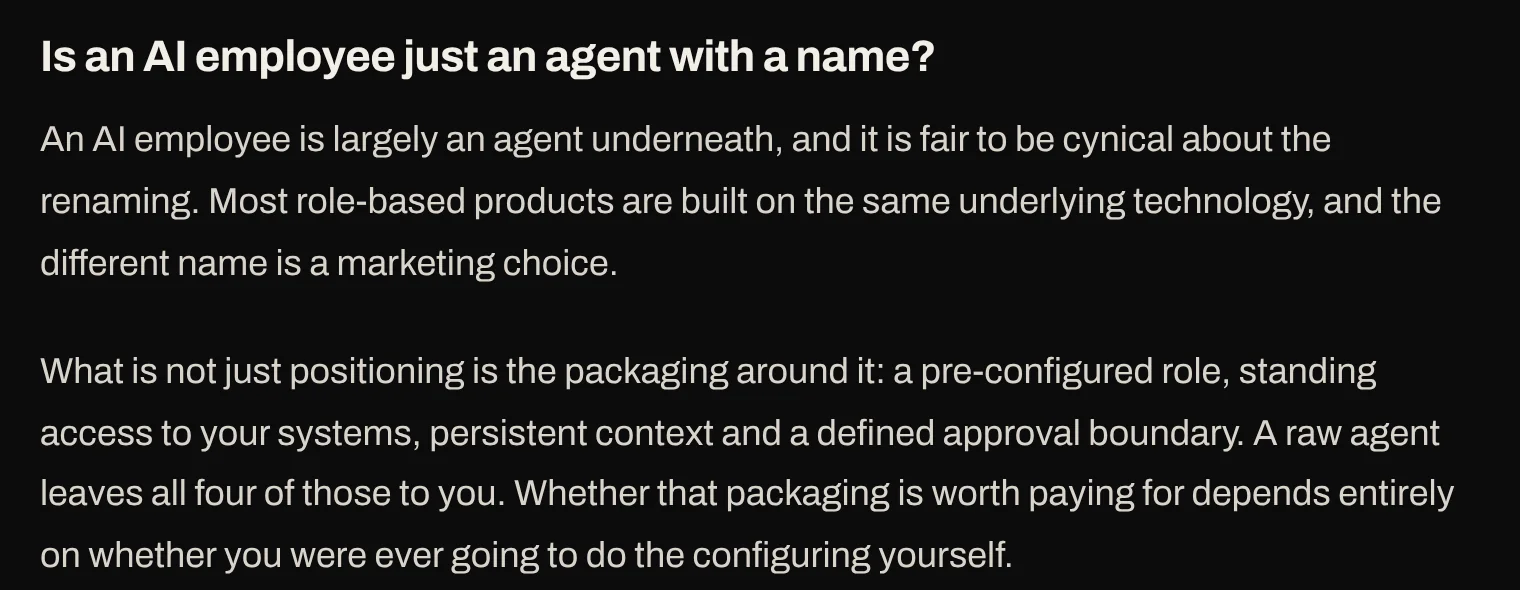
Marblism's guide, captured November 23, 2026. A vendor's own view of the renaming.
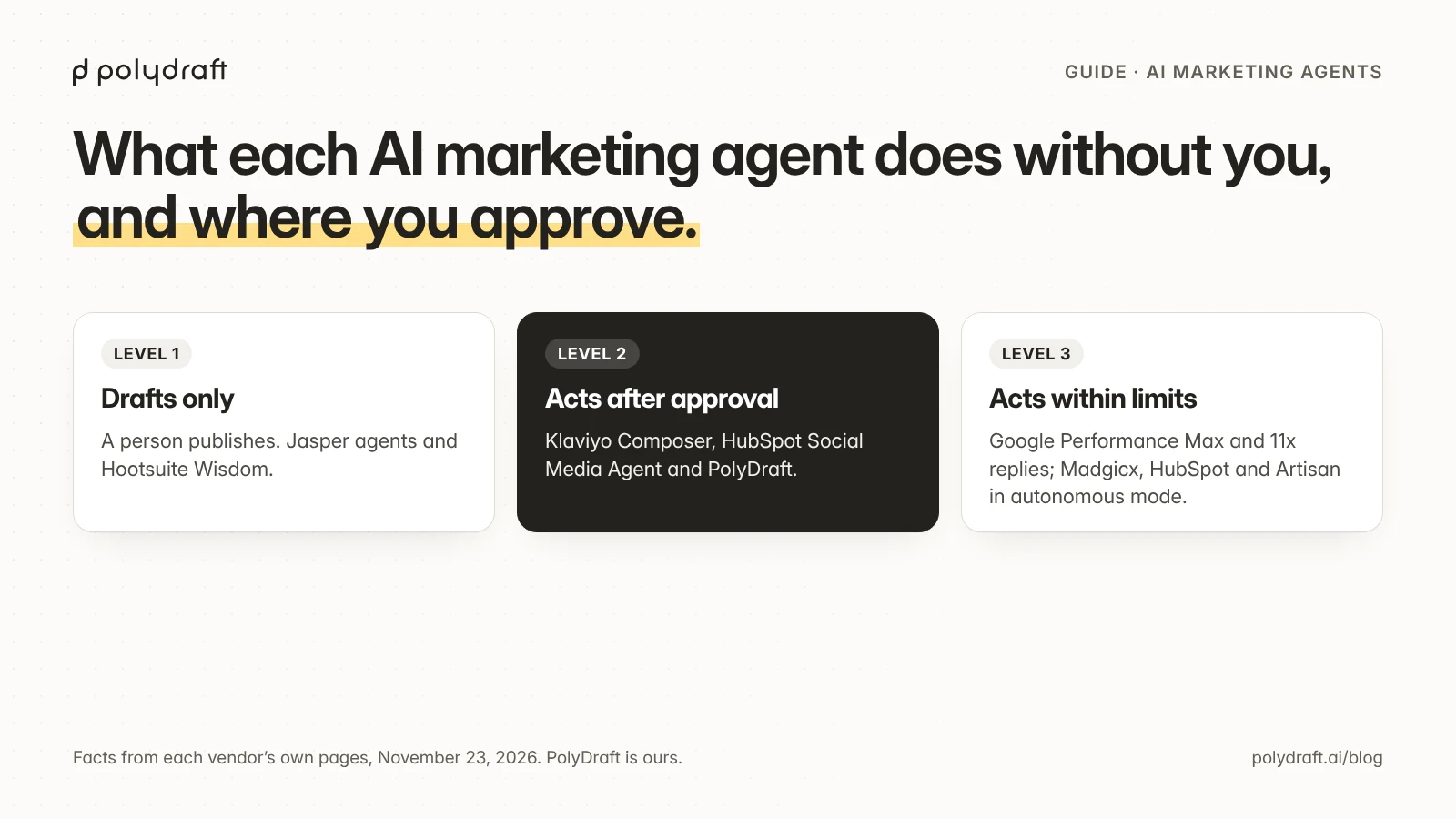
For small teams choosing a first task, our guide to AI agents for small business ranks tasks by risk and cost. If you need tools a person operates rather than agents, see the best AI tools for small business. Marketing teams can compare agents by autonomy in our list of AI marketing agents, and sales teams can see which outbound jobs agents run in our AI GTM engineer guide.
PolyDraft note: an agent for one job, not a general AI employee
PolyDraft (our product). PolyDraft is an agent for one job: building a business website and running its SEO and content work. Its pricing page lists weekly keyword opportunities from your Search Console, new articles, refreshes of pages that slip and a weekly SEO report on every plan. Plans start at $39 a month ($32.50 billed yearly), and Pro adds a Slack bot the team can ask for page changes. Every article is published after the user authorizes it, so it sits at level 2 on the scale above. It does not answer customer calls, emails or chats, so it is not a general AI employee, and we make no ranking or traffic promises for it.
Frequently asked questions
What is the difference between an AI employee, an AI agent and a chatbot?
A chatbot answers and changes nothing in your systems. An AI agent acts on one goal at a time. An AI employee is an AI agent kept on an ongoing role. It has standing access to your tools, memory of your business and rules for which actions wait for your approval.
Is an AI employee the same as an AI agent?
Mostly. An AI employee is an AI agent packaged as a role, with standing access, memory and approval rules set up for you. Marblism, which sells AI employees, says one "is largely an agent underneath". Support vendors such as Fin and Zendesk call similar products AI agents.
What is an AI worker?
Another name for an AI employee. Marblism says "AI employees, AI workers and AI staff are different names for the same thing". Viktor says people use both words "for the same idea". Ask an AI worker the same questions as any AI employee: which tools it can touch, and what it may do without approval.
What is a digital worker?
It has two meanings. Some AI employee vendors use "digital worker" as a synonym for an AI employee; Marblism says an AI employee is "also sold as a digital worker". In older automation software, a digital worker is an RPA bot that follows a fixed script across systems.
What is the difference between an AI coworker and an AI employee?
Mostly wording. "AI coworker" and "AI teammate" stress working alongside people in shared channels like Slack. Viktor uses both "AI employee" and "AI coworker" for the same product. Neither name tells you how much it may do without approval; ask that directly.
Is "AI employee" a defined term?
No. No standards body defines it, and vendors draw the line in different places. Our working definition is software given a whole role, such as running an inbox or a blog. It works inside your tools without a prompt for each step, and follows rules for which actions wait for a person. The label is marketing; the approval rules are what you buy.
How do AI employees work?
You connect the tools a role uses, such as email, CRM or your website, and give it instructions. It then starts work on a schedule, when something happens or when someone asks in Slack or Teams. It drafts or acts, and actions you mark as needing approval wait until a person clicks approve.
Are AI employees worth it?
They can be for repeated, written-down work that a person already reviews, where mistakes can be caught before customers see them. They are a poor fit for judgment-heavy work, costly irreversible actions, or teams with no one to read the output. Check the pricing unit against your usage first.
Continue with the next task
- Compare products sold as AI hires, by role, with prices and approval rules: AI employees compared
- Pick the first task to hand an agent in a small business: AI agents for small business
- Put agents to work on your site's search with review steps: how to use AI agents in SEO
About this article. Drafted by an AI agent following PolyDraft's blog workflow, checked by an automated QA script and approved by Vincent Chen. It follows our editorial policy. Every vendor definition, approval rule and pricing unit was read on the vendor's own page on November 23, 2026. Each is quoted from text saved with the capture; none comes from a search excerpt. For the November 2026 update, Intercom's and Fin's pricing pages were re-read on November 23, 2026 through DataForSEO's page crawler. No product was tested hands-on. The comparison table marks vendor wording in quotation marks; the rest of it, the definition in the opening and the approval-level rubric are our synthesis. The RPA meaning of "digital worker" is general background, not sourced to a captured page. Search volumes come from our own DataForSEO Labs pulls for Google, United States, English, on November 23, 2026; close variants share one figure. The "ai worker" figures and the October 2025 value come from a keyword overview pull that day. Screenshots are cropped and resized captures of vendor pages, otherwise unchanged. PolyDraft is our product and was held to the same evidence rule.
Sources
- Viktor, AI employee page: definition, comparison table and FAQ, read November 23, 2026
- Viktor, AI coworker page and FAQ, read November 23, 2026
- Viktor, approvals documentation, read November 23, 2026
- Viktor, workspace permissions documentation, read November 23, 2026
- Viktor, pricing, read November 23, 2026
- Lindy, home page: definition and approval card, read November 23, 2026
- Lindy, pricing and FAQ, read November 23, 2026
- Marblism, What is an AI employee? guide, read November 23, 2026
- Marblism, AI employees page and comparison table, read November 23, 2026
- Marblism, home page FAQ, read November 23, 2026
- Marblism, Penny (SEO role) page, read November 23, 2026
- Marblism, pricing, read November 23, 2026
- GoHighLevel, AI page, read November 23, 2026
- GoHighLevel, pricing page: add-ons and disclaimer, read November 23, 2026
- GoHighLevel, AI Employee Suggestive Mode help article, read November 23, 2026
- Fin, Customer Agent page, read November 23, 2026
- Fin, pricing, read November 23, 2026
- Intercom, pricing: Copilot add-on, read November 23, 2026
- Zendesk, AI agents for customer service, read November 23, 2026
- Artisan, AI sales agent page and FAQ, read November 23, 2026
- Artisan, home page, read November 23, 2026
- 11x, home page, read November 23, 2026
- Motion, home page, read November 23, 2026, after /ai-employees redirected there
- PolyDraft, pricing, read November 23, 2026