Business Website Examples: What Good Small-Business Sites Have in Common
Nine business website examples, annotated from dated screenshots: homepage sections, calls to action, trust signals and local SEO details to copy or avoid.
Good business website examples share five things you can see in a few seconds. The homepage says what the business sells and to whom. It shows where the business is or whom it serves. It gives one main next step, such as "Get a quote" or "Shop now". It shows proof near that step. And it puts the name, address and phone number where people and search engines can find them. Below are nine real sites, annotated from screenshots taken on November 13, 2026.
We make PolyDraft, an AI website builder, and two of the nine examples were built with it, so we have an interest here. We label both as built with PolyDraft and critique them by the same rules as the others. We didn't build new sites for this article.
Key points
- Six of the nine name a city, region or country near the top of the homepage. Only one shows a full street address and phone number on its homepage.
- The strongest examples repeat one call to action and put a reason to trust them right beside it: a sample report, named sources or local awards.
- A local business's website, structured data and Google Business Profile should share one name, address and phone number. One example here doesn't.
What the best business website examples have in common
The best business website examples share a simple structure. They have a clear offer, a visible location or service area and one repeated call to action. They put proof next to that action, and their contact details match everywhere. Their designs vary; the structure doesn't.
| Pattern | What it looks like on the page | Best example below |
|---|---|---|
| Name the offer | A headline that says what you sell in plain words, not a slogan | The inspection service: its headline names the service and the country it works in |
| Show where you work | City, region or service area in the headline, eyebrow text or brand name | The manufacturer: its headline names the product and its home city |
| One main action | The same call to action in the header and the hero | polydraft.ai: "Start your site" in the header, and a hero prompt box whose "Build my site" button starts the same sign-up |
| Proof beside the action | A sample, named sources, awards or numbers the visitor can check | The inspection service: "See a sample report" next to "Book an inspection" |
| Consistent contact details | Name, address, phone or email on every page, matching structured data | The social club: full address and phone on the homepage; polydraft.ai: footer matched by its markup |
Each example below ends with what to copy and one thing to improve.
How we chose and checked these examples
We picked live businesses, not templates, whose homepages we could reach and screenshot on November 13, 2026. All nine are real sites. Five of them appear without their names, at the owner's request, as explained below.
- Local service businesses (3), anonymised. A pet-care company, a social club and event venue, and a small consulting and trades business. We found them in a website builder's public gallery of customer sites, captured their own sites and read their HTML. Because we point out a fixable problem on each, we describe them by type and region only. Their screenshots are redacted: names, logos, web addresses, phone numbers, street addresses, faces and distinctive slogans or badges are hidden, and the layout is left as it was.
- Our own sites (3). polydraft.ai, our own small software business, and two client sites built with PolyDraft. We disclose that those two were built with PolyDraft, but we don't name them, so this article doesn't say which specific businesses use our product. Their screenshots are homepage captures from our case records, redacted the same way. We describe only what those captures and our case records show.
- Shopify's store examples (3), named. Shopify's store examples page shows real stores as desktop and mobile views. We picked three small shops whose pages say something about place, then opened the stores' own sites where we could.
For each one we recorded the business type, main call to action, trust signals and local SEO details. Those are the name, address and phone number (NAP), any Google Business Profile link, and the JSON-LD in the HTML where we could fetch it.
Example 1: polydraft.ai, a small B2B software business
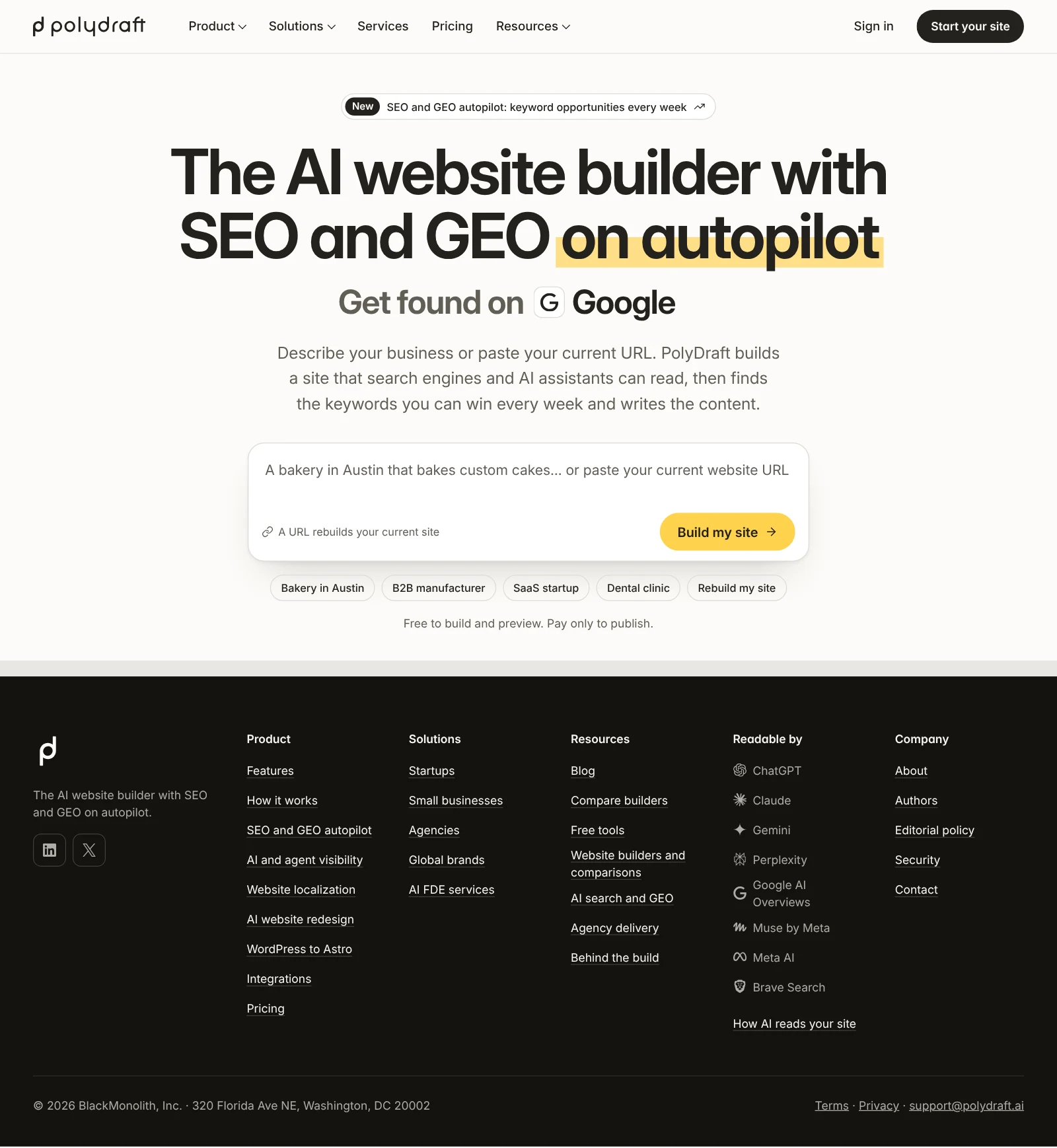
polydraft.ai is our own site, a small business-to-business software company. On November 13, 2026, its sitemap listed 81 URLs, 48 of them under /blog. The homepage works like a landing page.
What it does well:
- One call to action, repeated. "Start your site" appears in the header and again in the closing section. The hero is a prompt box: you describe the business or paste your current URL, and its "Build my site" button starts the same sign-up. The only other action, "Book a free website review" for our done-for-you service, is an outline button further down the page, so the two don't compete.
- The price model sits under the button: "Free to build and preview. Pay only to publish."
- The footer carries the company details. It shows the legal name, BlackMonolith, Inc., a Washington, DC street address and a support email on every page. Trust pages such as Editorial Policy and Security sit beside them.
- The markup matches the footer. The homepage's Organization JSON-LD gives the same name, street address and email as the footer, and adds the unit number. Google's Organization structured data guide says this markup "can help Google better understand your organization's administrative details".
One thing to improve: the first screen shows the promise but no proof. A line under the prompt box linking to a customer example would put evidence where the decision is made.
Examples 2 to 4: three local service businesses
These three sites serve customers in one area, the closest match to a website for a local business. We captured each and fetched its HTML on November 13, 2026, without signing in or submitting forms. They appear without their names, and their screenshots are redacted.
A pet-care company serving one US city
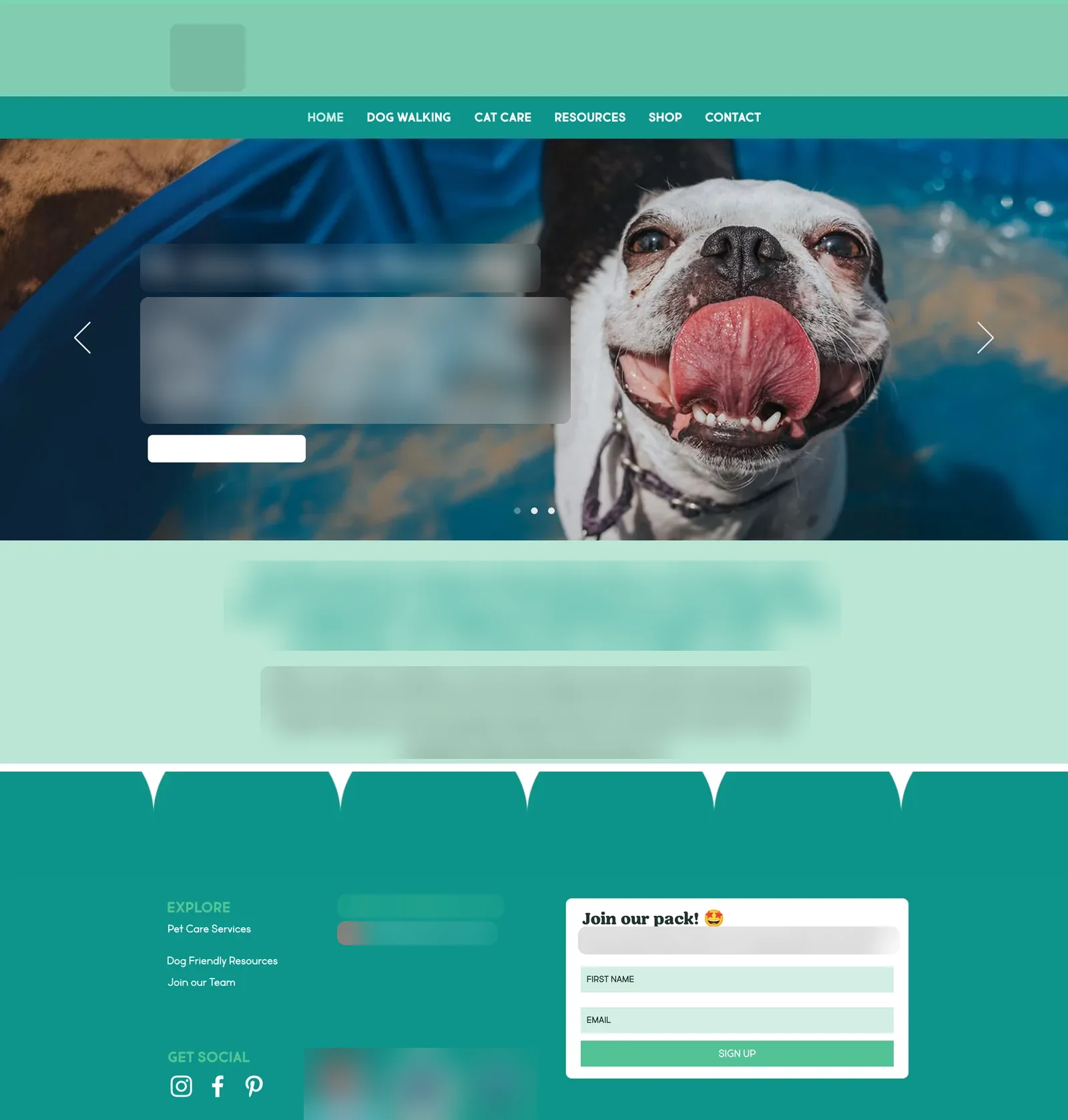
This company offers dog walking, cat sitting and overnight care in one US city, and also runs dog-friendly events and an online merchandise store. It visits customers at home, so it has a service area rather than a shop.
What it does well:
- The hero lists reasons to trust them. Five short lines cover a star rating, real-time updates, insured staff, same-day scheduling and a count of local customers. They answer a pet owner's worries before the first button. These are the company's own claims.
- The city sits in the first heading below the hero, which names the city and the services together. The contact form then lists the neighborhoods it serves.
- The menu is the service list, and each service page has a descriptive address that combines the service and the city.
- Local proof. The footer shows a local magazine's readers' poll award, a pet-sitting industry award finalist badge and a professional association badge. A "Featured in" row shows press logos.
- Structured data that fits a service area. The homepage HTML carries LocalBusiness JSON-LD with the business name, city, state and country, but no street address, which suits a business without a shopfront.
One thing to improve: the homepage and contact page show email addresses and a form, but no phone number. Pet owners booking same-day care often want to call, so a local number in the header or footer, also added as telephone in the markup, would help.
A social club and event venue in the US Southeast
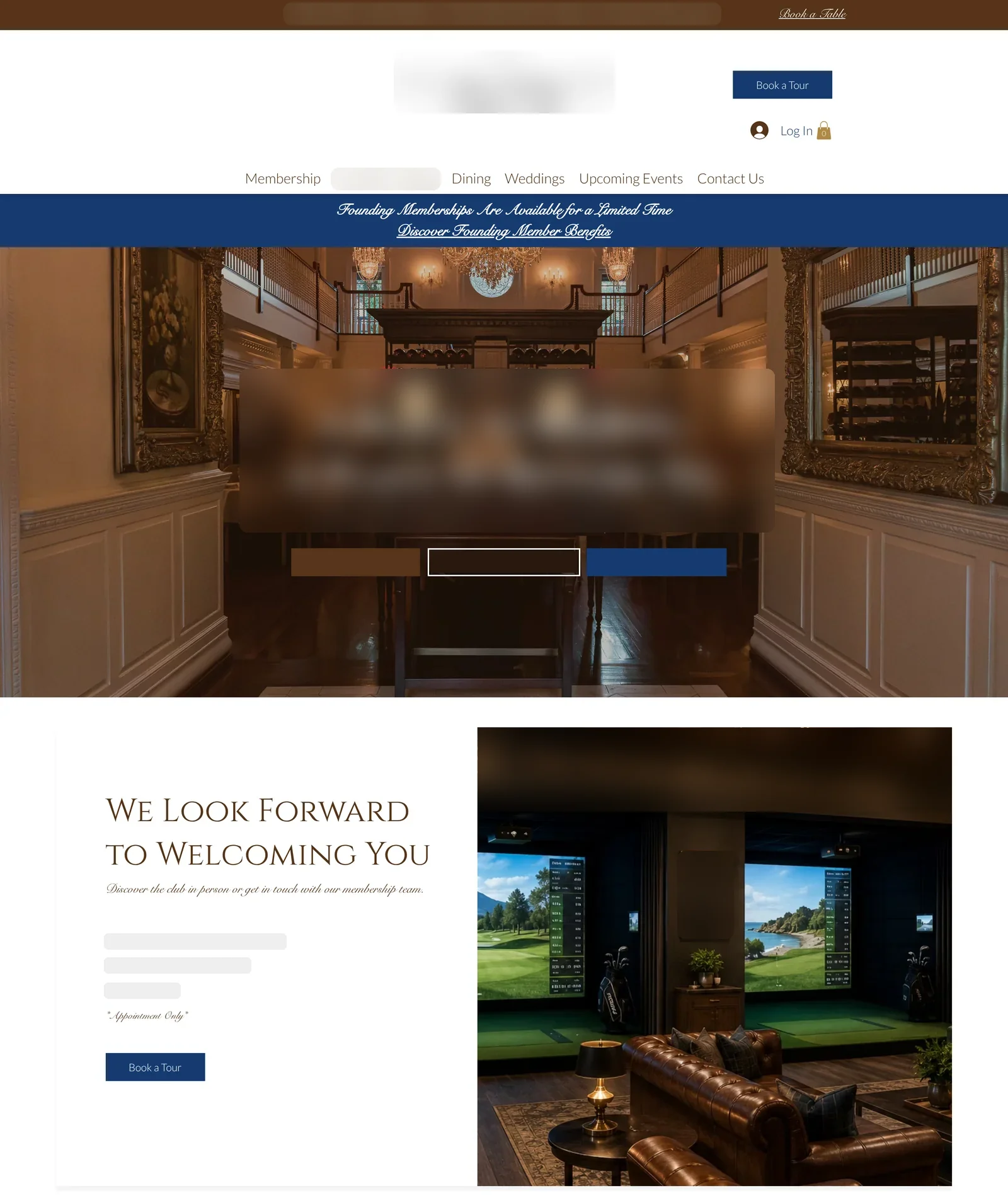
This is a private social club and event venue in the US Southeast, with restaurants, weddings and member events. Its page title names the business type and its town.
What it does well:
- Full contact details on the homepage. A welcome block near the foot of the page gives a street address, an email address, a phone number and "Appointment Only", then a "Book a Tour" button.
- Bookings happen on the homepage. Its two sit-down restaurants each have a "Book a Table" form with party size, date and time. The walk-in café lists its hours and phone number instead.
- Directions are one click away. A directions button in the hero links to Google Maps. We couldn't open the short link, so we can't say whether it leads to a Business Profile.
One thing to improve: the homepage HTML we fetched carries only WebSite JSON-LD, with no LocalBusiness or Organization markup. The address and phone number are already on the page, so LocalBusiness markup with the same details is a small addition. The hero could also lead with one main button instead of three.
A small consulting and trades business on a free website address
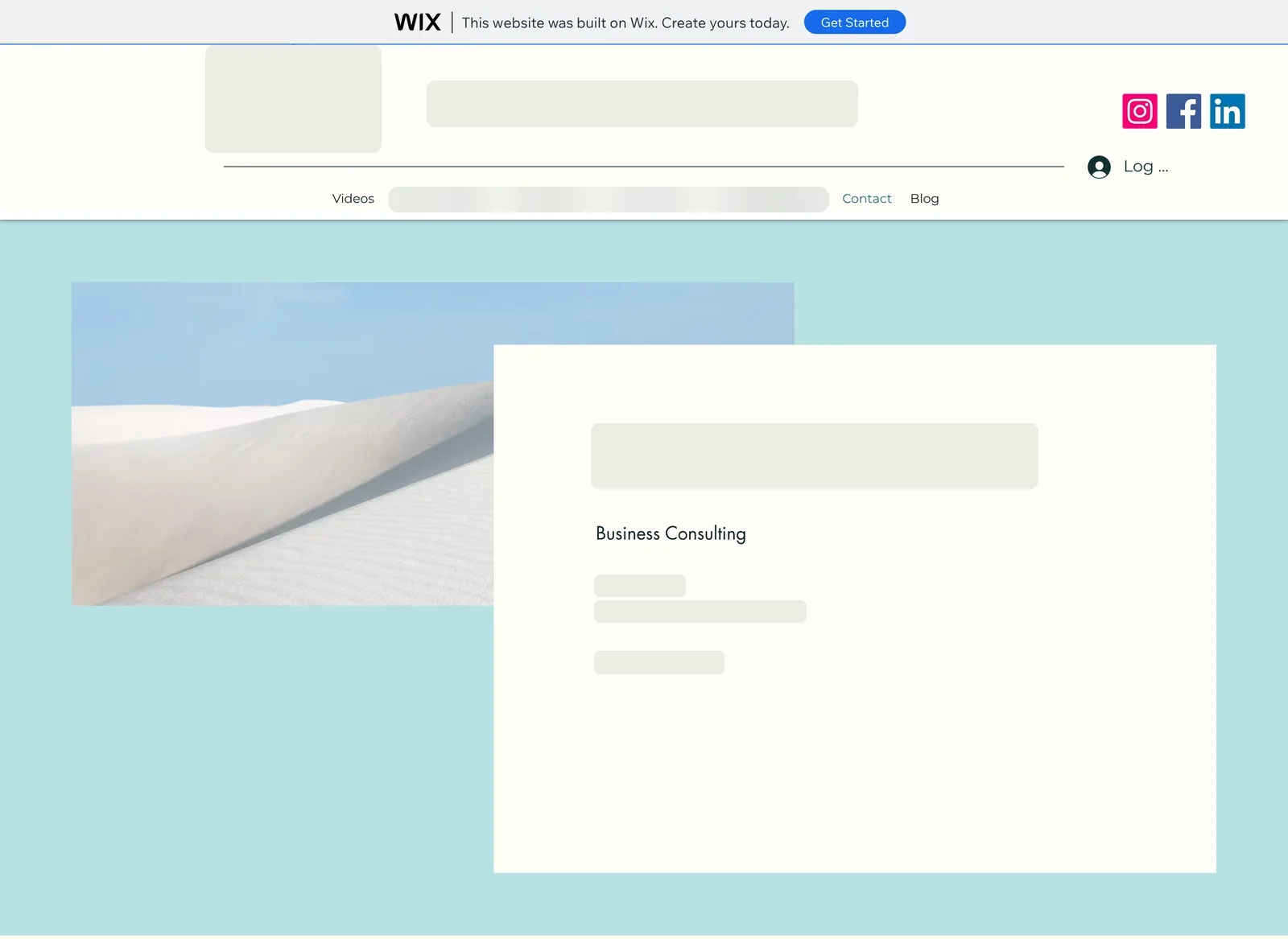
This small business offers business consulting alongside a trade service and bookkeeping, from one town in the western US. The site we checked runs on a website builder's free subdomain, under the builder's "This website was built on Wix" banner. Its footer also names a separate domain, which we didn't open.
What it does well:
- Each service has its own block. Each of the three services gets a homepage panel and a menu item.
- A plain contact card. The contact page shows the business name, street address, town, state, ZIP code and phone number as text, next to a form.
- The address is in the homepage title, and the homepage HTML carries LocalBusiness JSON-LD with a name, street address and phone number.
One thing to improve: the details don't match. The markup lists a different phone number than the contact card, and a shorter form of the business name than the header and the card use. Menu pages use default addresses such as /blank-4. One name, one phone number and descriptive page addresses would make the business easier to match. Google's LocalBusiness guide describes telephone as "a business phone number meant to be the primary contact method for customers".
Examples 5 and 6: two business sites built with PolyDraft
These two sites were built with PolyDraft. We don't name them, and their screenshots are redacted. Our case records for both say their facts come from our own records and haven't been independently audited. The screenshots are homepage captures from those records, as served on November 13, 2026; we didn't open the live sites for this article.
An industrial equipment manufacturer’s site built with PolyDraft
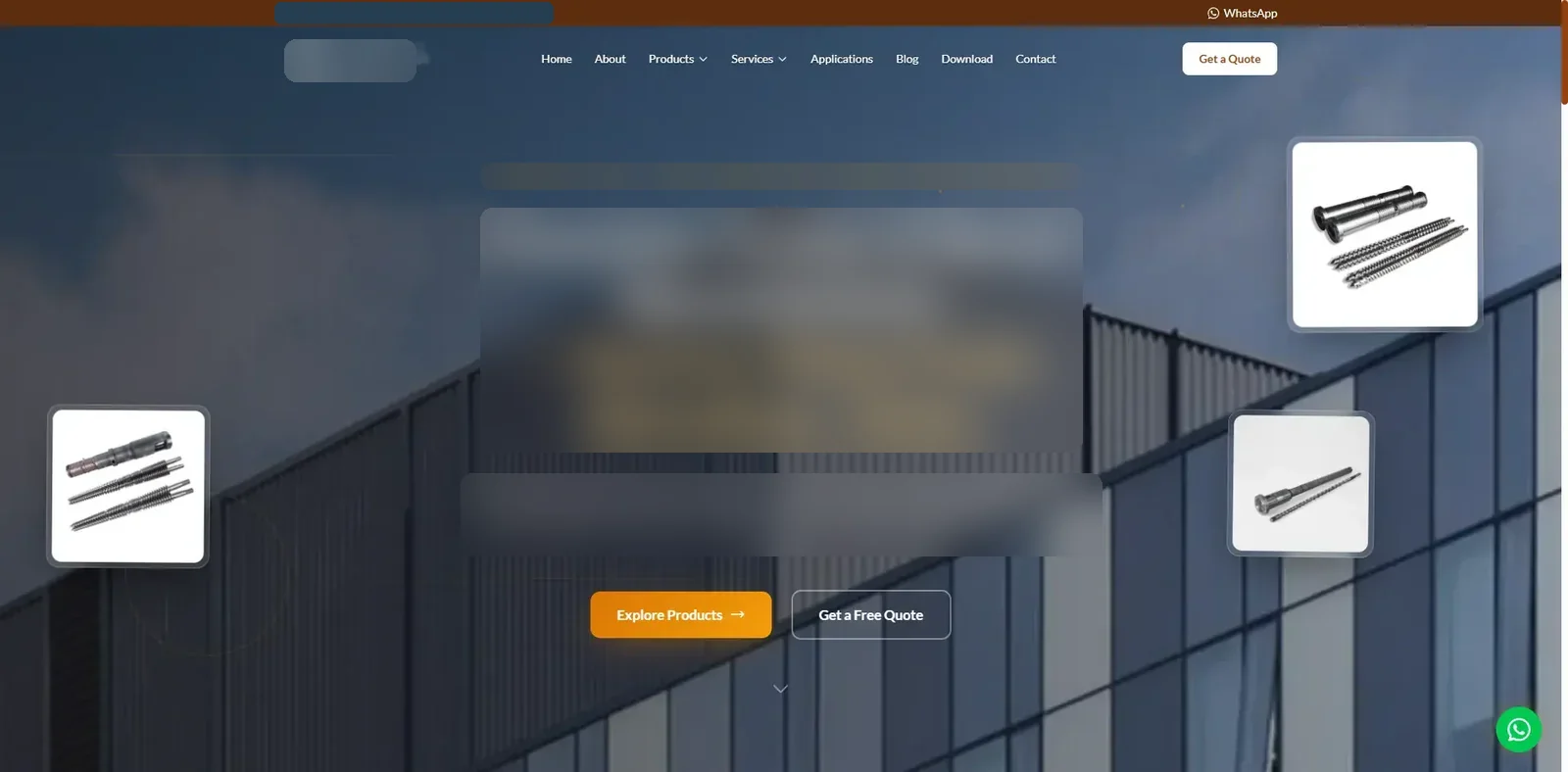
This manufacturer makes machine components for industrial equipment and sells them to buyers abroad. The site has around a dozen pages: a homepage, a product category index, product pages with specification tables, capability, quality control, about, an inquiry-driven contact page and a blog.
What it does well:
- The headline names the product and the place. It says what the company makes and that it sells factory direct from its home city.
- Contact details sit above everything. A thin top bar shows a phone number, an email address and a WhatsApp link, which suits buyers in other time zones.
- The menu follows how buyers shop. Products and Services have drop-downs, and Applications and Download point engineers to specification material.
- Product photos frame the headline, so the visitor sees the actual parts before reading a word.
One thing to improve: the quote action has two labels. The header says "Get a Quote" and the hero says "Get a Free Quote". If they lead to the same form, one label would make that obvious.
A quality-inspection service site built with PolyDraft
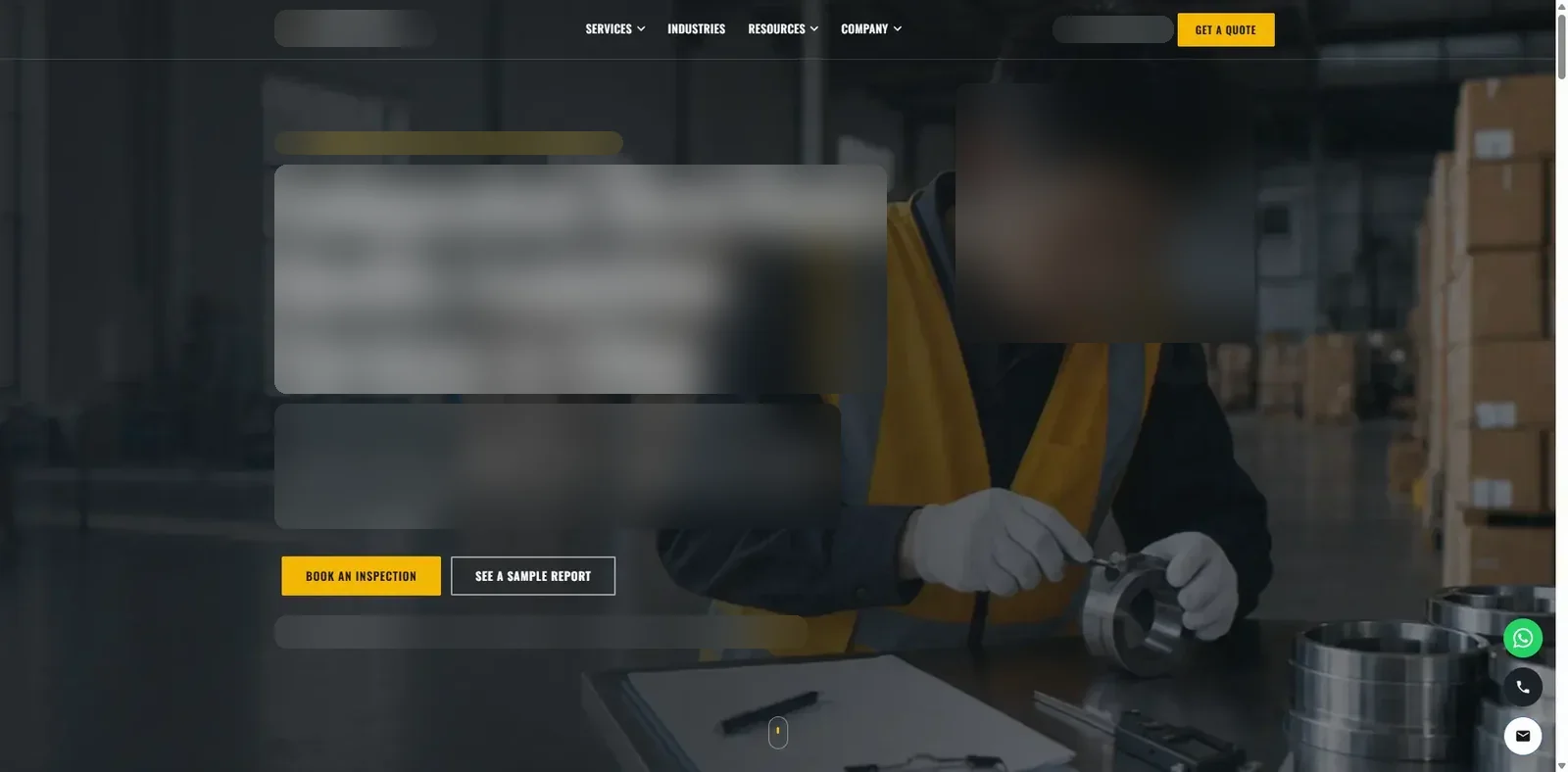
This service inspects goods and audits factories for importers who can't travel to their suppliers. The site has a homepage, one page per inspection and audit service, process, coverage, about, a lead-capturing contact page and a blog.
What it does well:
- The headline is the search query. It names the service and the country in close to the words an importer would type.
- Proof sits beside the action. "See a sample report" stands next to "Book an inspection", so a cautious buyer can check the deliverable before paying.
- Specific, checkable claims. The paragraph under the headline names a quality certification, how widely its inspectors are spread, the sampling standard it follows and how fast the report arrives. These are the site's own claims; we didn't verify them.
- Objections answered in one line. A line under the buttons addresses fees, travel costs and inspector integrity. A header phone number and floating WhatsApp, phone and email buttons follow the visitor.
One thing to improve: the certification is the strongest trust signal on the page, and the capture doesn't show where to verify it. A link to the certificate or the certifier's record would make it checkable.
Examples 7 to 9: three small shops from Shopify’s examples
We captured these three stores on Shopify's examples page on November 13, 2026, and read the Mollyjogger and Island Creek Oysters stores' own pages. The With Love, From Brooklyn store redirected to an address we couldn't reach.
Mollyjogger: an outdoor goods shop with a regional story
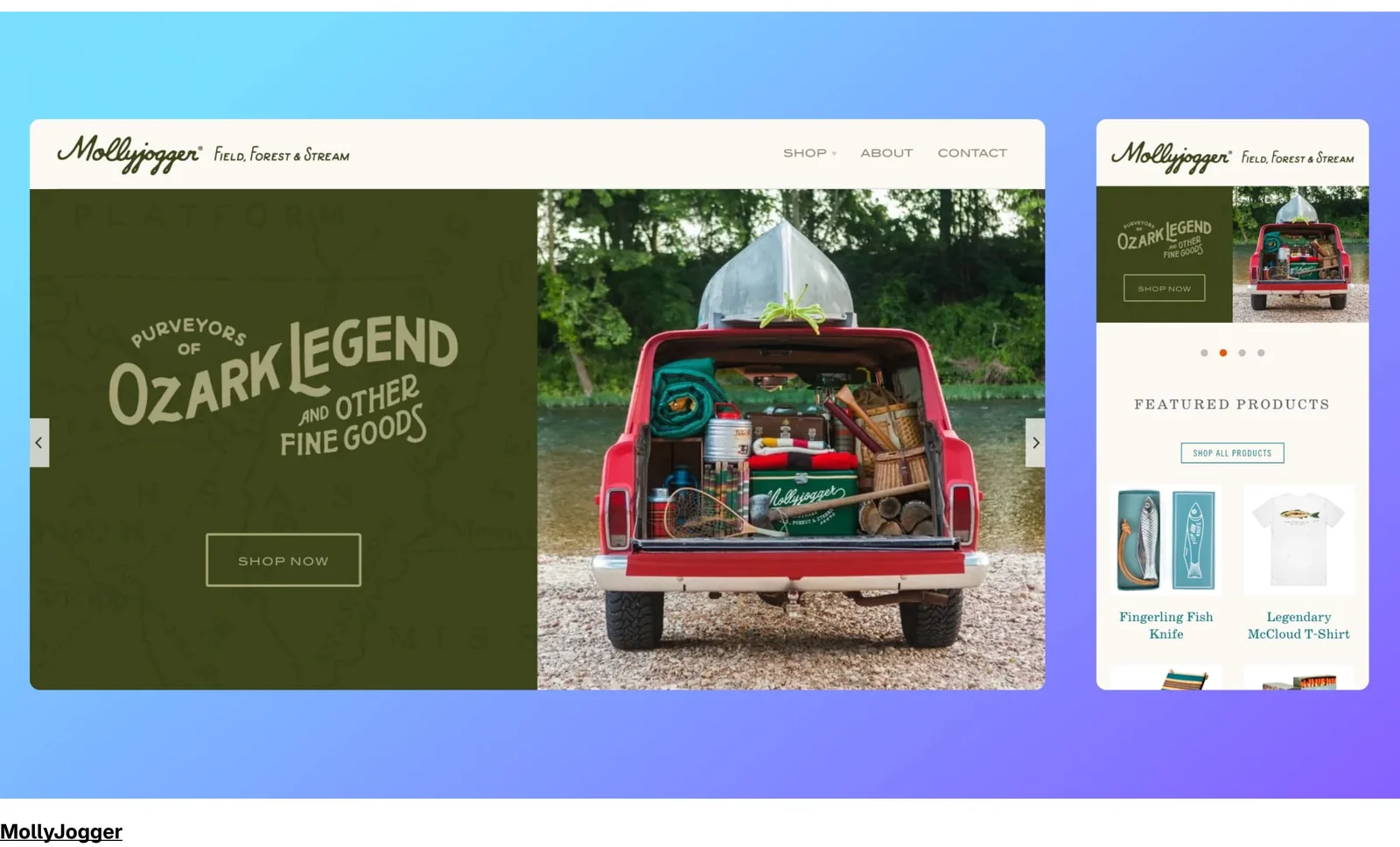
Mollyjogger sells outdoor goods under the line "Field, Forest & Stream". Shopify lists it under "Home and decor".
What it does well:
- A short menu: Shop, About and Contact.
- Place in the brand story. "Purveyors of Ozark legend and other fine goods" ties the products to a region in one line.
- The photo shows the use. A truck loaded with gear under a canoe shows when you would use the products.
One thing to improve: the hero is a carousel, with four slide dots on the mobile view, so visitors who don't swipe see only the first message. On the store itself, the footer lists an email address but no phone number or address, and the homepage HTML had no JSON-LD.
With Love, From Brooklyn: a local gift shop that sells its city
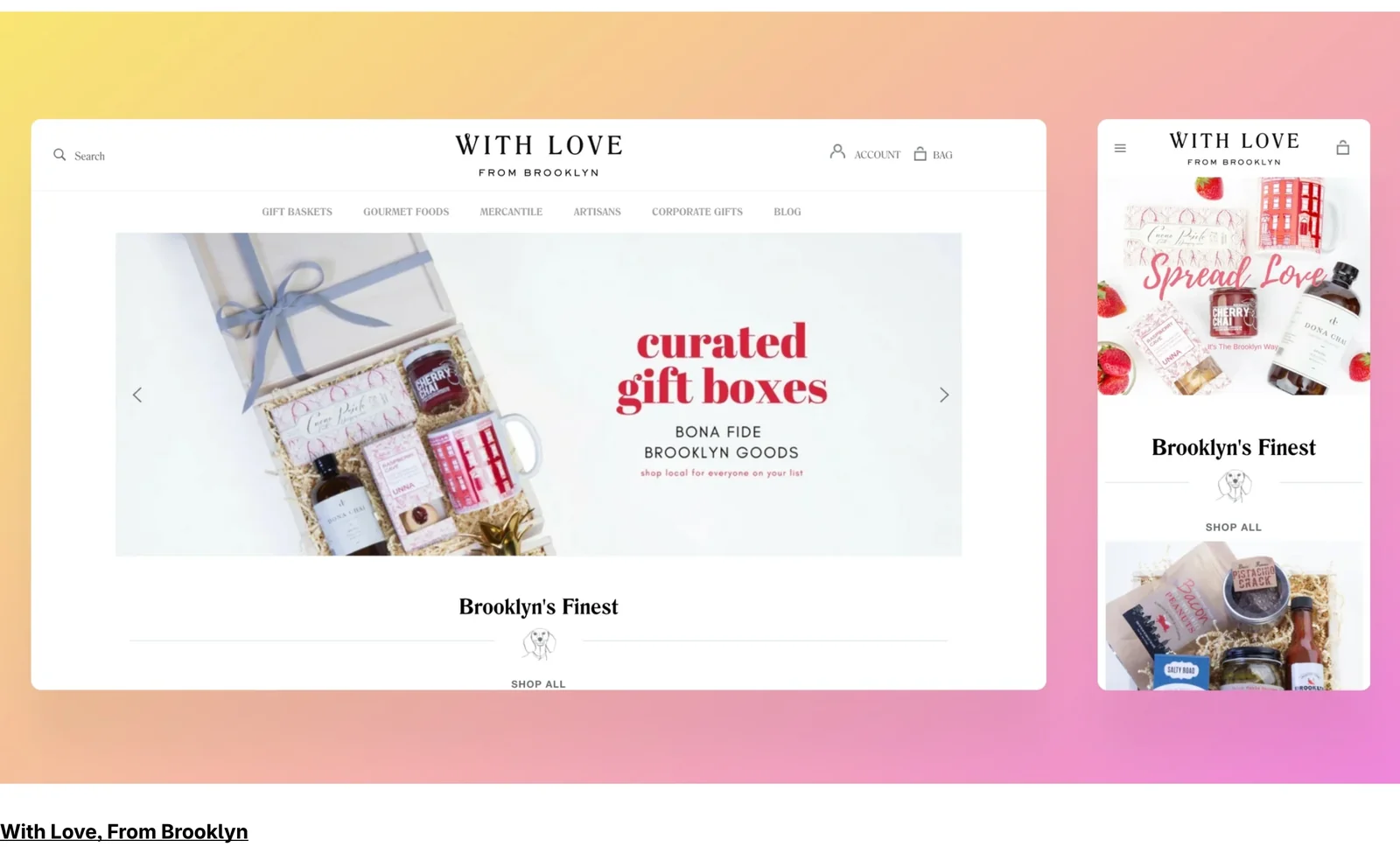
With Love, From Brooklyn sells gift boxes of Brooklyn-made goods. Shopify lists it under "Food and Drink".
What it does well:
- The location is the brand. The name, the hero line "Bona fide Brooklyn goods" and the heading "Brooklyn's Finest" all repeat the city. The hero also says "shop local for everyone on your list".
- A path for business buyers. "Corporate Gifts" has its own menu item, so a company ordering in bulk doesn't have to dig.
One thing to improve: the menu labels are small and light grey in the capture, which makes the main navigation hard to read. Larger, darker labels would help, especially for older visitors.
Island Creek Oysters: product names that carry the place
Island Creek Oysters sells oysters and other seafood online from shop.islandcreekoysters.com, and its menu also links to its raw bars and farm tours.
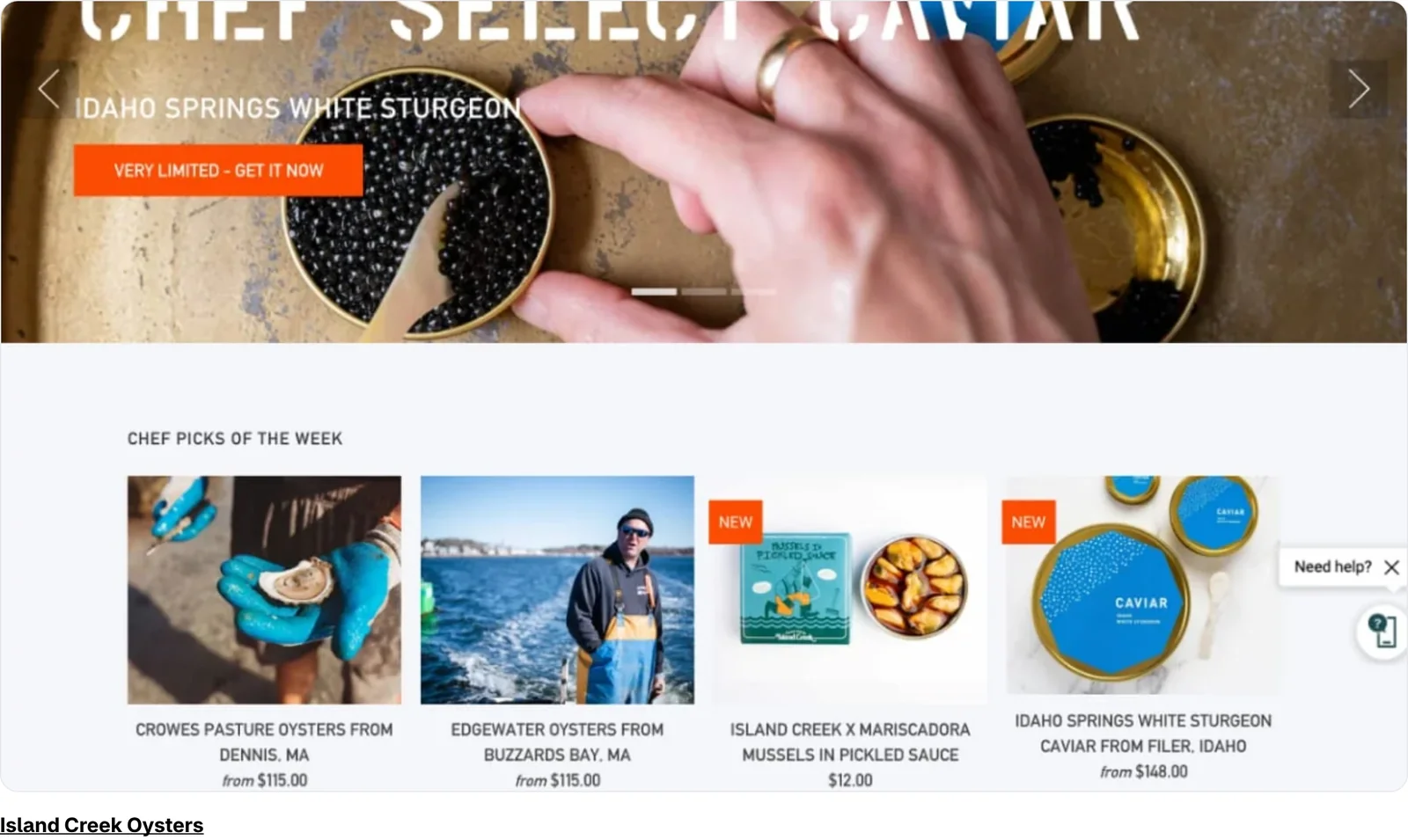
What it does well:
- Every product names its origin. "Crowes Pasture oysters from Dennis, MA" and "Edgewater oysters from Buzzards Bay, MA" tell a buyer where the food comes from.
- A grower on a boat in one product photo makes the source feel real.
- A curated entry point with prices. "Chef picks of the week" gives a first-time buyer a short, priced list instead of the whole catalog.
- Help on screen. A "Need help?" chat prompt sits beside the product row, and the store's footer lists a support phone number with its hours.
One thing to improve: the street addresses live only on the visit pages. The Duxbury raw bar page lists 403 Washington St, but neither it nor the homepage had any JSON-LD. LocalBusiness (or Restaurant) markup on each raw bar page, with its address, hours and phone, would let search engines match each location.
Business website examples compared
The table puts the nine examples side by side. "Not checked" means we couldn't reach the live site.
| Example | Business type | Primary call to action | Trust signals seen | Local SEO elements seen |
|---|---|---|---|---|
| polydraft.ai | B2B software | Start your site / Build my site | Price line, footer trust pages | Footer address and email; matching Organization markup; no phone |
| Pet-care company (anonymised) | Pet care, service area | One hero button | Hero claims, award badges, press logos | City in copy; email, no phone; LocalBusiness markup with city only |
| Social club and venue (anonymised) | Social club and venue | Book a Tour, Book a Table | Booking forms, events, press logos | Full NAP on the homepage; town in title; Maps link; WebSite markup only |
| Consulting and trades business (anonymised) | Consulting, a trade service, bookkeeping | Contact us for a free consultation | Experience claim (its own) | NAP on the contact page; markup with a different phone |
| Industrial manufacturer (built with PolyDraft, anonymised) | Manufacturer, about a dozen pages | Explore Products, Get a Quote | Product photos, spec menus | Top-bar phone and email; city in headline; Schema.org data per our case record |
| Inspection service (built with PolyDraft, anonymised) | Inspection service, about a dozen pages | Book an inspection | Sample report, certification claim | Header phone; country in headline; FAQ markup per our case record |
| Mollyjogger | Outdoor goods shop | Shop now | Product-in-use photo | Region in headline; email only; no JSON-LD |
| With Love, From Brooklyn | Local gift shop | Shop all | Local-maker message | City in brand; store not checked |
| Island Creek Oysters | Seafood shop and raw bars | Very limited, get it now | Named farms, grower photo, live help | Footer phone; raw bar addresses on visit pages; no JSON-LD |
The strongest pages put proof right next to the main button. Complete, matching contact details are rare. Only the social club shows a street address and phone number on its homepage. Only the consulting business's markup has both, and its phone number doesn't match the contact page.
Local SEO basics for a website for a local business
A website for a local business needs the same name, address and phone number as its Google Business Profile. It also needs a page for each service or location, and structured data that matches what visitors see. The website supports the Business Profile; it doesn't replace it.
Google says local results are "mainly based on relevance, distance, and popularity". Its tips to improve your local ranking list verifying the business, keeping information complete and accurate, managing reviews and adding photos. Google's guidelines for representing your business say the name should match the real-world name "as used consistently on your storefront, website, stationery". They also ask for "a phone number that connects to your individual business location, or … a website that represents your individual business location".
Three things on the website follow from that:
- Show your NAP as text on every page, in the footer, in the same form as your Business Profile.
- Give each location its own page, with its own address, hours and phone number, and link each Business Profile to its page. Island Creek Oysters' raw bar pages are a good start.
- Add LocalBusiness structured data that matches the page. Google's LocalBusiness guide lists
nameandaddressas required and recommends properties such astelephone,url,geoandopeningHoursSpecification. It also says "Google does not guarantee that features that consume structured data will show up in search results". A company with no place to visit, like ours, can use Organization markup instead. Google's Organization guide recommends a LocalBusiness subtype when the site is about a local business, "for example a restaurant or a physical store".
None of the local examples links to a Google Business Profile that we could identify. That isn't required; the website's job is to show the same details.
If you are planning which pages a new site needs, our SEO plan for a new website covers the launch set and the Business Profile step. If a single page has to carry everything for now, our guide to one-page website SEO explains what that page can and can't rank for.
What to avoid
Copy the structure of the good examples, not their look. These are the fixable mistakes we saw:
- Two labels for one action, like the manufacturer's "Get a Quote" and "Get a Free Quote".
- Strong claims with no link to proof, like the certification claim in the inspection service's capture.
- A hero carousel as the main message. Four of the nine use one, including the pet-care company and Mollyjogger; put the key message on the first slide or drop the slider.
- Small, low-contrast menu text, as in the With Love, From Brooklyn capture.
- A different phone number or name in the markup than on the page, as at the consulting business.
- Default page addresses such as /blank-4 instead of words that describe the page.
Templates are fine for the look, but a template has no customers or real address, so in builder galleries check whether an entry is a real business or a demo.
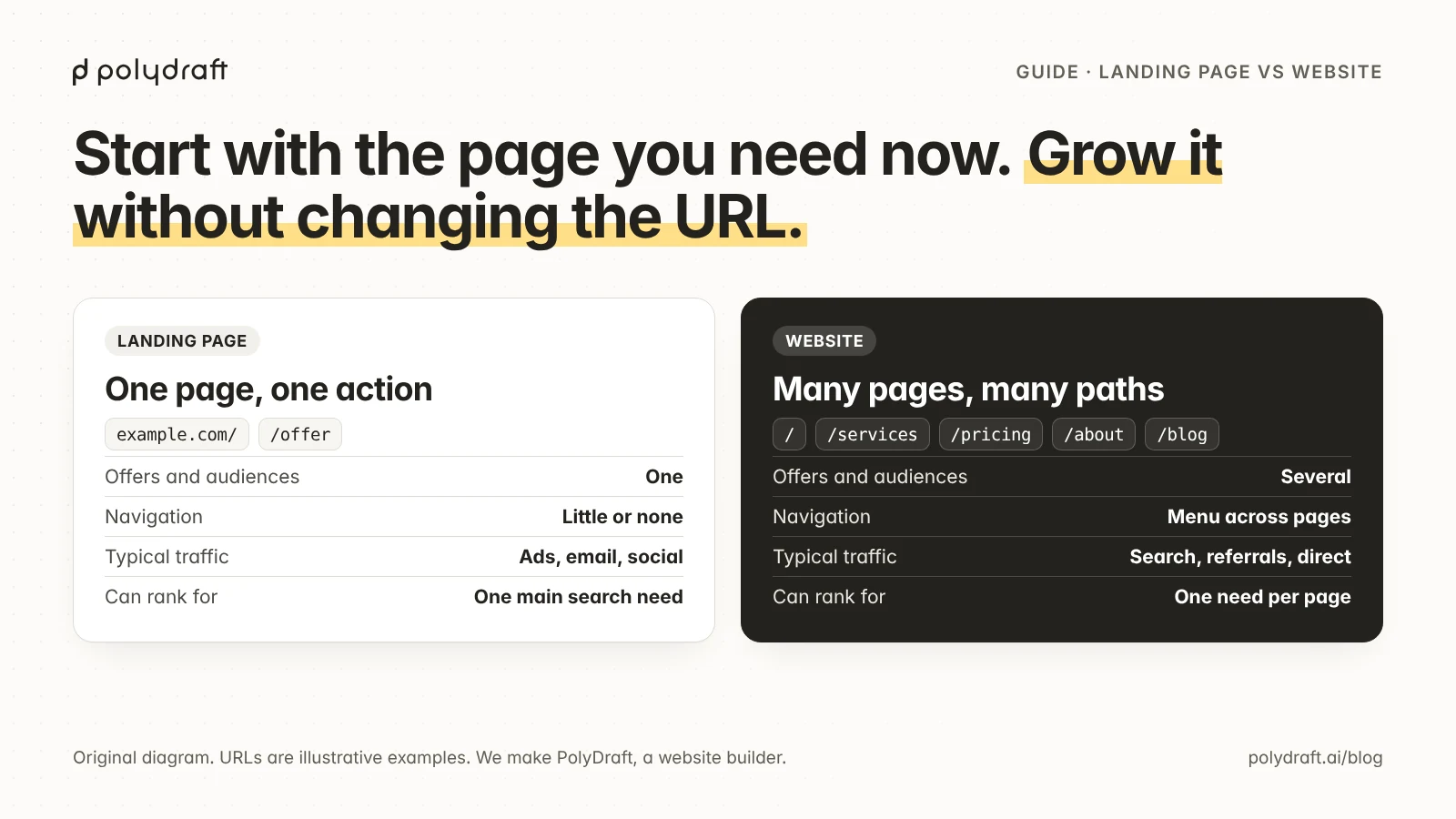
The structure also decides how many pages you need. Our guide to landing pages vs websites has a decision table for one page versus several. Our website architecture guide shows how to map each search to one page as the site grows.
A day-one checklist for a business website
A business website needs these ten things on launch day, drawn from the examples and Google's local guidance.
| # | Item | Example that does it |
|---|---|---|
| 1 | A headline that says what you sell and for whom | The inspection service |
| 2 | Your city, region or service area on the homepage | The pet-care company, the manufacturer |
| 3 | One main call to action, in the header and the hero | polydraft.ai |
| 4 | Proof next to that action, because trust is decided where the click happens | The inspection service ("See a sample report") |
| 5 | A page per service, product group or location, so each search has a page to land on | The inspection service, one page per service |
| 6 | Name, address and phone number as text on every page, matching your Business Profile | The social club (on its homepage) |
| 7 | A contact page with a form and the same details | The consulting business |
| 8 | Structured data that matches the visible details | The pet-care company, polydraft.ai |
| 9 | About and policy pages linked from the footer | polydraft.ai |
| 10 | A verified Google Business Profile with the same name, address and phone | Set up on Google, not on the site |
Plan the running costs too. Our website cost breakdown shows what a small site costs to keep up after launch.
Where PolyDraft fits
PolyDraft is one way to build a multi-page business site like the manufacturer's or the inspection service's. We make it, so weigh this section accordingly.
PolyDraft builds a server-rendered Astro website from a conversation. The site publishes to your own Cloudflare account, so it keeps running if you cancel, and its admin includes a blog. As of November 13, 2026, our pricing page says building and previewing are free and a subscription is needed only to publish. Starter costs $39 a month, and access is currently invite-based. Our page for small businesses explains the approach, and the one for startups covers sites that grow in stages.
Know the limits. PolyDraft has no online store, so shops like the Shopify examples belong on a commerce platform. It doesn't manage redirects or import sites from Wix, Squarespace, Webflow or WordPress, and it doesn't verify your Business Profile or check your markup against your footer. If you're also looking at AI tools that generate app code rather than a finished business site, our Replit vs Lovable comparison covers that side.
Frequently asked questions
What should a small business website include?
A small business website should include a homepage that says what you sell and where, with one main call to action. Add a page for each service, an about page and a contact page. Show your business name, address and phone number as text in the footer. Add structured data that matches those details and keep them identical to your Google Business Profile.
What is a good example of a business website?
A good business website example names its offer in the headline, shows where the business works, repeats one call to action and puts proof beside it. One inspection service in this article does this with "Book an inspection" next to "See a sample report". The nine examples here are annotated from screenshots taken on November 13, 2026.
How many pages does a business website need?
Most small business websites need a homepage, one page per main service or product group, an about page and a contact page. The two PolyDraft-built examples in this article each have around a dozen pages. A business with one offer can start on a single page and add pages when it adds services.
Does a local business website need LocalBusiness schema?
LocalBusiness structured data isn't required to rank, but it lets you tell Google about details such as your address, hours and phone number. Google lists name and address as required properties and doesn't guarantee rich results. The markup should match what visitors see on the page, and the details should match your Business Profile.
Where should the address and phone number go on a business website?
Put the business name, address and phone number as text in the site footer so they appear on every page, and repeat them on the contact page. Use exactly the same form as your Google Business Profile. A phone number in the header helps service businesses whose customers call before they book.
Are website builder templates good business website examples?
Templates are useful for the look, but they aren't business website examples, because a template has no real customers, address or reviews. Use a template for layout ideas, then check real business sites in your industry for structure, calls to action and the trust signals your buyers expect.
Continue with the next task
- Deciding between a single page and a full site: Landing page vs website
- Planning the pages to launch with: SEO for a new website
- Mapping each search to one page: Website architecture for SEO
- Budgeting for upkeep after launch: Website cost breakdown
- Seeing how a PolyDraft site gets built: How PolyDraft works
About this article. Drafted by an AI agent following PolyDraft's blog workflow, checked by an automated QA script and an independent review pass, and approved by Vincent Chen. Screenshots were captured on November 13, 2026 with a headless Chromium browser, then cropped and resized. They show the live sites for polydraft.ai and the three local businesses, homepage captures from our case records for the two PolyDraft builds, and Shopify's examples page for the shops. At the owner's request, the three local businesses and the two PolyDraft-built sites appear without their names, and their screenshots were redacted to hide identifying details; nothing else in them was changed. Claims described from the example sites, such as certifications, awards and customer counts, are those sites' own; we didn't verify them or measure any site's traffic. Search volumes come from DataForSEO (US, English), retrieved November 13, 2026. The hero is an original illustration.
Sources
- Google Search Central: Local business (LocalBusiness) structured data, Organization structured data, both last updated September 8, 2026
- Google Business Profile Help: Tips to improve your local ranking on Google, Guidelines for representing your business on Google
- Schema.org: LocalBusiness
- Shopify: Shopify store examples, checked November 13, 2026
- PolyDraft: Pricing, checked November 13, 2026