9 Marketing Strategies for Startups in 2027, Ranked by Cost and Time
Nine marketing strategies for startups, ranked by the cash each platform requires and how soon it gives a first signal. Sources checked November 19, 2026.
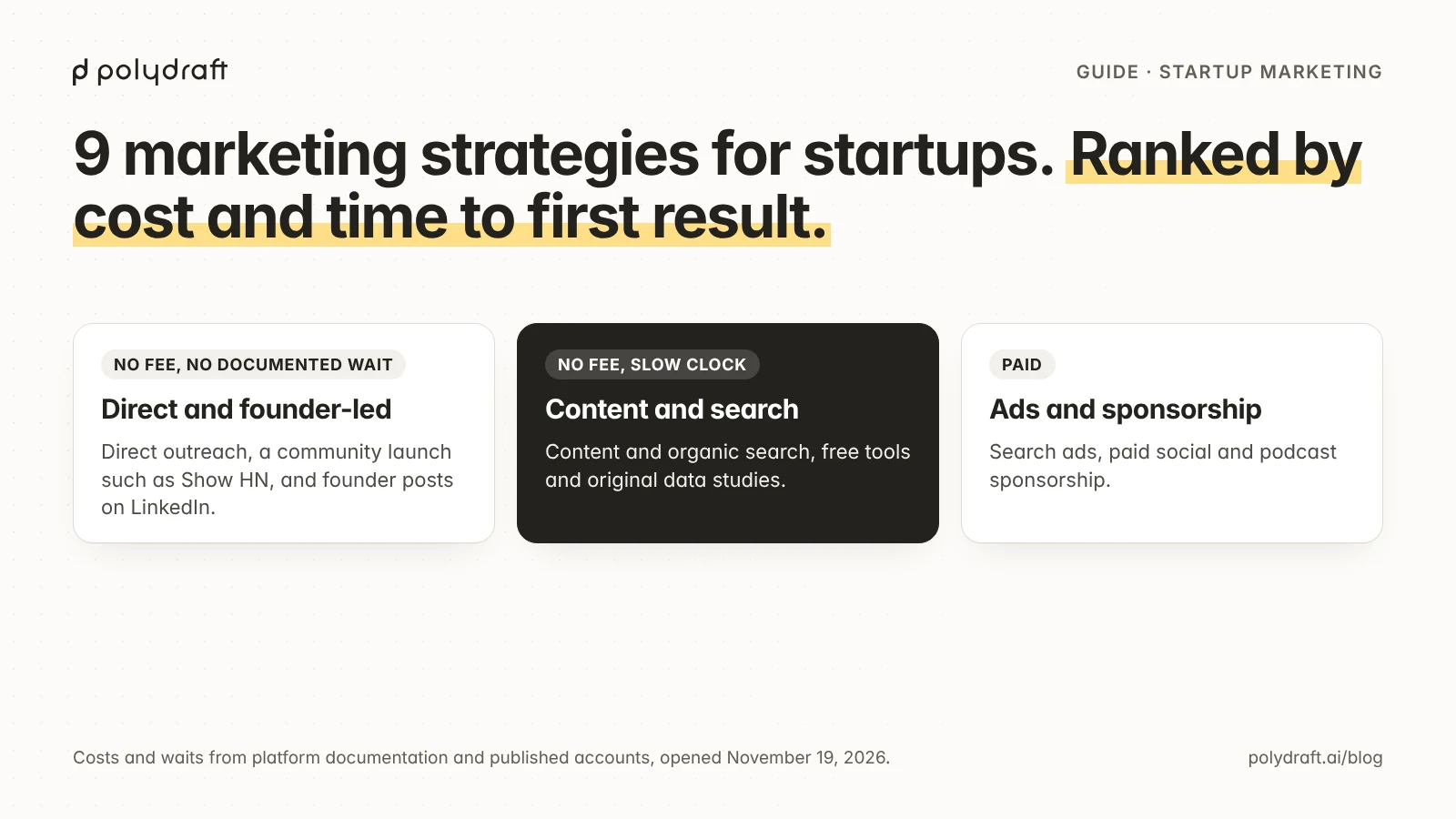
The cheapest and fastest marketing strategies for startups are the ones with no platform between you and the customer: direct outreach, a community launch, and posting as a founder. Each has a cash floor of $0 and no documented waiting period. Search ads are the fastest paid channel: Google says most ads are reviewed within one business day, and you set the budget. Content and organic search carry no platform fee but run on a clock of months.
This list ranks nine channels on two things you can check before spending anything: the cash the platform requires, and how soon the channel can show whether it is working. Every figure comes from a primary source opened on November 19, 2026, or from our own measurement. We did not test these channels against each other. We make PolyDraft, a website builder with content and search features; it appears in channel 4, and its free tools are named in channel 5.
Key points
- Search ads give the fastest paid signal. Google's own example is a $10 average daily budget, which caps the month at $304.
- Organic search is slow by its own platform's account. Google says some changes "could take several months". Ahrefs found that 1.74% of new pages reached the top 10 within a year.
- Fast-growing startups mostly collect brand demand from search. Across ten AI startups we measured, a median 90% of estimated organic traffic came from searches for the company's own name.
- Sponsorship buys awareness. Ahrefs reported 11 trial signups from $14,200 spent on five podcasts.
How we picked and ranked
A channel is on this list only if we could open a primary source for its cost or timing on November 19, 2026: a platform's documentation, a company's published account of its own spend, or our own measurement. That rule removed several familiar channels, named under "What we left out" below.
The ranking sorts by cash floor, the least money the platform requires, and then by earliest feedback, the shortest documented wait before a result can appear. Your hours are a real cost that no platform documents, so they are not ranked.
We use two of the nine ourselves. Content and organic search (channel 4) started in October 2026, on a site we build and maintain with PolyDraft. Our outreach (channel 1) is link outreach. For the other seven channels, this article reports documentation and other companies' published numbers, not our own results.
Nine marketing strategies for startups at a glance
| Rank | Channel | Cash floor | Earliest feedback | Source |
|---|---|---|---|---|
| 1 | Direct founder outreach | $0 | No documented wait | Gmail sender guidelines |
| 2 | Community launch (Show HN) | $0 | Listed when posted | Hacker News guidelines |
| 3 | Founder posts, LinkedIn Page | $0 | No documented wait | LinkedIn Help |
| 4 | Content and organic search | $0 in platform fees | "A few hours" to "several months" | Google, Ahrefs, our benchmark |
| 5 | Free tools | Build time | Not documented | Ahrefs on its own tools |
| 6 | Original data studies | Research time | Not documented | Ahrefs on its own studies |
| 7 | Search ads (Google Ads) | You set it; Google's example is $10 a day | Most ads reviewed within one business day | Google Ads Help |
| 8 | Paid social (LinkedIn Ads) | Minimum shown in Campaign Manager only | Not stated on LinkedIn's help page | LinkedIn Help |
| 9 | Podcast sponsorship | From $300 an episode (2018) | Booked a quarter ahead | Ahrefs' published spend |
"No documented wait" means the platform's pages describe no review or approval step. It is not a measured reply time.
1. Direct founder outreach
Direct outreach, the founder writing to people one at a time, has no platform fee and no review queue. Its limits are deliverability and your own time. Once outreach becomes a system, it is a GTM engineer's work; our guide explains what a GTM engineer builds for outbound and inbound.
Email providers do set rules. Google's email sender guidelines require every sender to Gmail accounts to set up SPF or DKIM authentication and to "keep spam rates reported in Postmaster Tools below 0.3%". That is three spam reports per thousand messages, so a careless list can damage delivery for everything sent from your domain.
Best for: products with a contract value that justifies a conversation, and any startup still learning why people say no. Not for: products sold for a few dollars a month.
Our own outreach is for links, not sales. Agents find link opportunities and draft the pitches and guest posts; we review them and send them ourselves, as our growth engineer tools list describes. This has run for about two months, and our estimate is ten or more links set up a month. DataForSEO's index shows 18 new referring domains in October and 16 in the first 19 days of November, from all sources, so it does not show which came from outreach.
2. Community launch (Show HN)
A community launch costs nothing and gets feedback the day you post, but only if the product can be tried. Hacker News is the one launch community whose rules we could open.
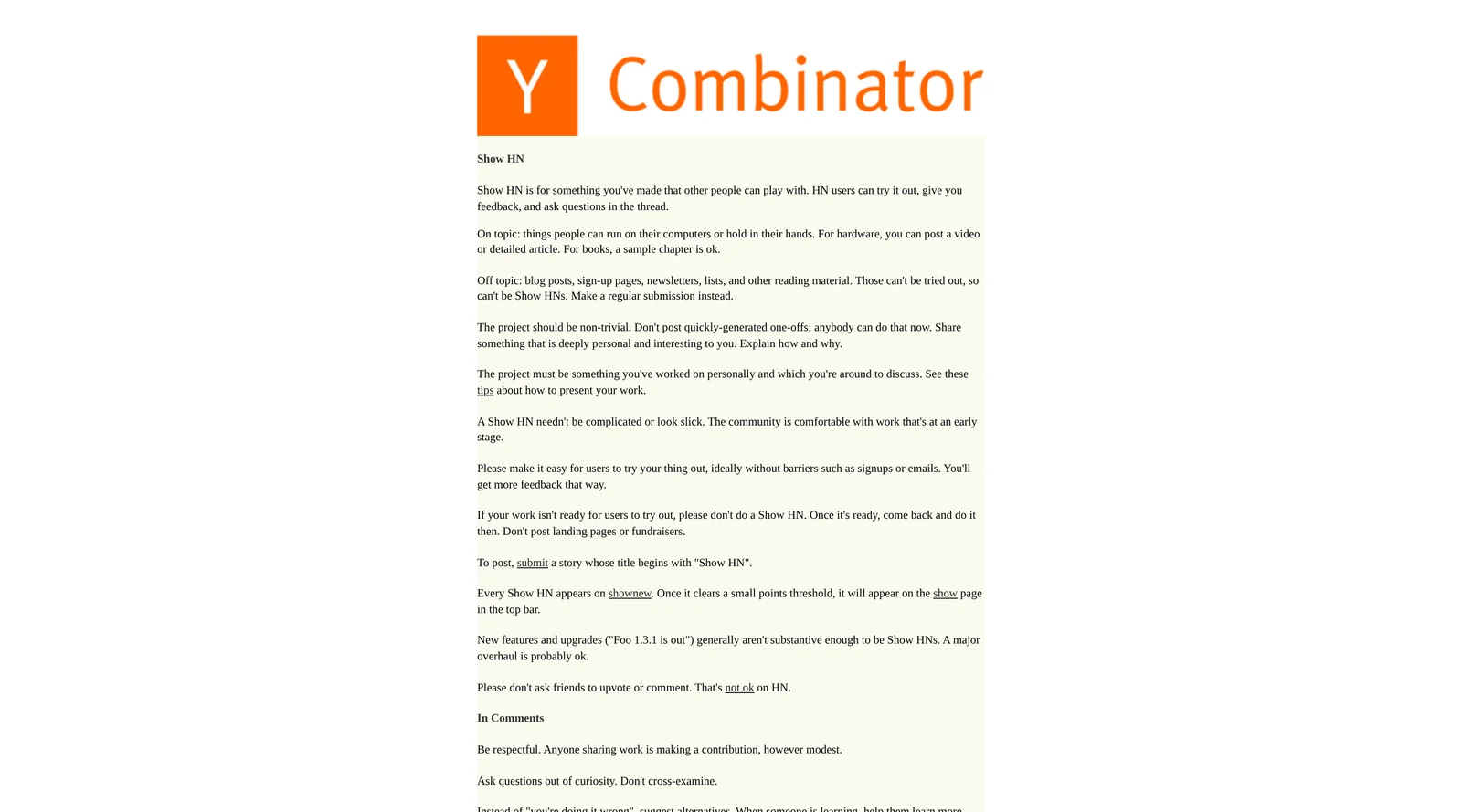
The Show HN guidelines say Show HN "is for something you've made that other people can play with". Sign-up pages and newsletters are off topic: "Don't post landing pages or fundraisers." Every Show HN appears on the "shownew" page and reaches the main Show page "once it clears a small points threshold".
Best for: developer tools and products with a demo that works without a sales call. Not for: a waitlist page; the rules exclude it.
3. Founder posts and a LinkedIn Page
Posting as a founder is free, and LinkedIn's help pages describe no approval step.
LinkedIn Help states that "You can create a LinkedIn Page for free". Members who meet LinkedIn's access criteria can also start a newsletter, and by default "your connections and followers will be invited by notification to subscribe" once the first article is published.
Best for: B2B founders whose buyers use LinkedIn. Not for: teams that need a predictable weekly number.
4. Content and organic search
Content and organic search have no platform fee and the slowest clock on this list.
Google's SEO Starter Guide says: "Some changes might take effect in a few hours, others could take several months."
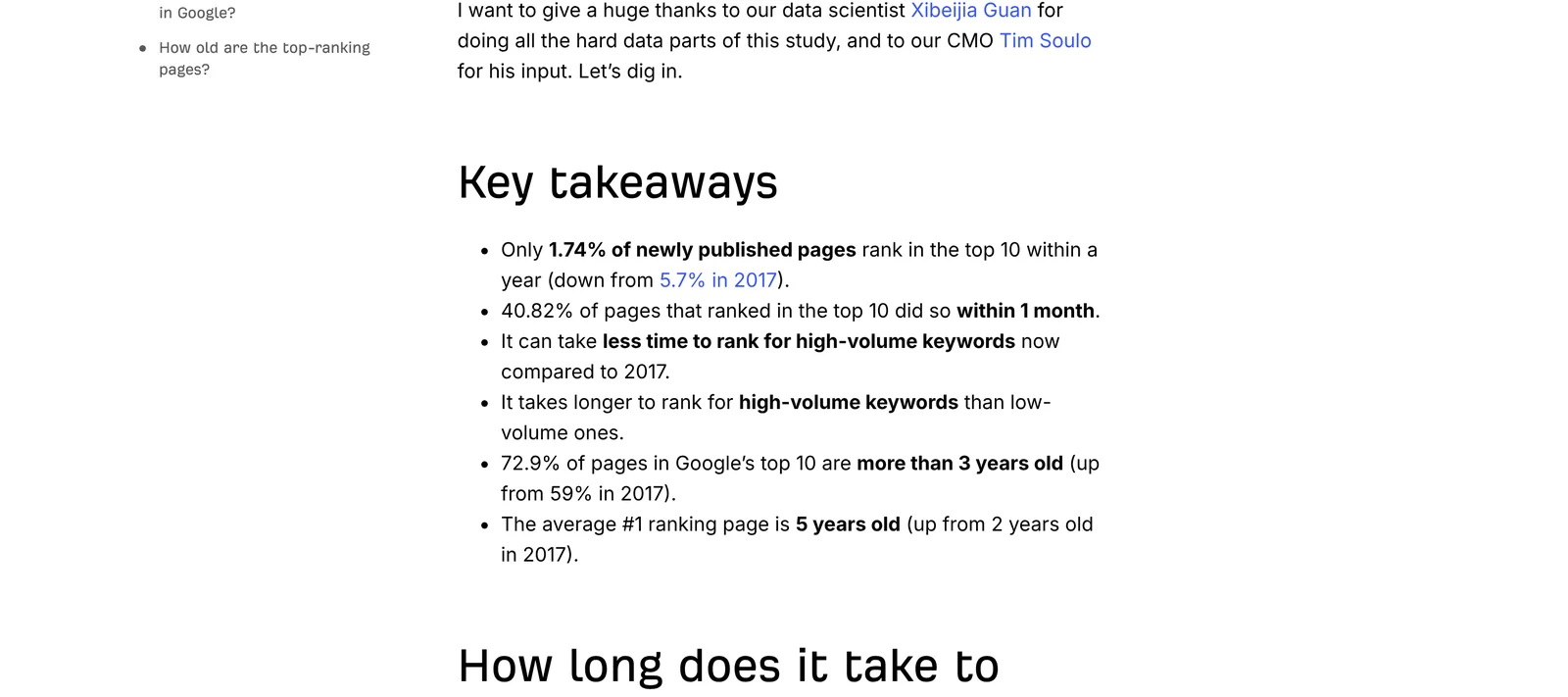
Ahrefs measured the odds. In a study published May 15, 2025, it took one million random URLs first seen in September 2023 and found that 1.74% reached Google's top 10 within a year. Of the pages that reached the top 10, 40.82% got there within one month.
What ten fast-growing startups get from search
On November 17, 2026, we used DataForSEO's US estimates to examine ten well-known AI and SaaS startups: Cursor, Cognition, Wispr Flow, Harvey, Sierra, Mercor, Supabase, Glean, Replit and Emergent. For each company's top 300 ranking keywords, we calculated the share of estimated traffic that came from searches containing the brand name.
- The median brand share was 90%.
- Nine of the ten were at 78% or higher.
- The exception was Emergent at 54%. Its top pages were reviews and pricing pages about other companies' products.
For these companies, organic search mostly collects demand created somewhere else. A startup with no brand searches cannot copy that; it needs non-brand pages, the slow path the Ahrefs numbers describe. The limits: these are third-party estimates, brand terms were matched by pattern, and Cognition's figure covers its corporate site only.
Our SEO for business guide covers the SEO detail.
Where PolyDraft fits
PolyDraft is our product, so weigh this paragraph accordingly. Its page for startups says blog posts and supporting pages "are researched and drafted against real search demand, then published through the built-in CMS". Each one is published after you authorize it: you request research or revisions, inspect the result, and approve publication. Building and previewing a site is free. Publishing requires a subscription, listed on the pricing page from $39 a month billed monthly or $390 billed yearly (US dollars, excluding taxes, as of November 19, 2026). Access is currently invite-based.
PolyDraft does not shorten the clock above, and its own page says "No ranking promises." It is a poor fit if you need pipeline this month or if nobody searches for your category yet.
5. Free tools
A free tool is a product feature given away to earn search traffic and trials. It costs build time, not media spend, and it inherits the organic search clock.
In its account of its own SaaS marketing (November 2, 2021), Ahrefs said its free SEO tools "generate a combined 300K monthly organic visits" and that each is "a limited version" of an existing paid feature.
PolyDraft has three free tools: an llms.txt generator, a robots.txt generator and a website cost calculator. We have no traffic or signup figures to report for them.
6. Original data studies
A data study earns links and mentions, not direct signups, so judge it on citations.
In the same article, Ahrefs said it publishes studies that "get almost no organic traffic" for thought leadership, to show its data, and for links. Its 2017 ranking study had, by its own count, "generated a total of 3,200 backlinks from ~1,500 unique websites".
Studies, free tools and content can feed each other; our guide to growth loops shows how one round becomes the input for the next.
Best for: startups whose usage or market data answers a question people argue about.
7. Search ads (Google Ads)
Search ads are the fastest paid channel with documentation to prove it, and the budget is yours to set.
Google's page on average daily budgets works through an example: $304 a month divided by 30.4 days is a $10 average daily budget. For most campaigns, spend can reach twice the daily budget on a single day but never more than 30.4 times the daily budget in a month. On timing, "Most ads are reviewed within one business day", and a new bid strategy shows a "Learning" status that "never lasts more than 7 days".
A first test on Google's example budget therefore costs at most $304 in a month. Google does not publish what a click costs in your market, and we could not open a primary source for one, so we give no cost-per-click figure.
Best for: categories where buyers already search for a solution. Not for: products people do not yet know to search for.
8. Paid social (LinkedIn Ads)
Paid social reaches people who are not searching, so it takes longer to judge than search ads. LinkedIn is the one network whose budget rules we could open.
LinkedIn's budget documentation says daily spend "might be up to 100% higher than the daily budget amount on a given day", capped at seven times the daily budget per week. For a lifetime budget, the minimum "will be displayed if the set budget is too low". The page publishes no dollar minimum, so we give none.
Best for: B2B products where job title or company defines the buyer.
9. Podcast sponsorship
Podcast sponsorship has the highest documented cash cost on this list and the weakest direct response. Buy it for awareness or not at all.
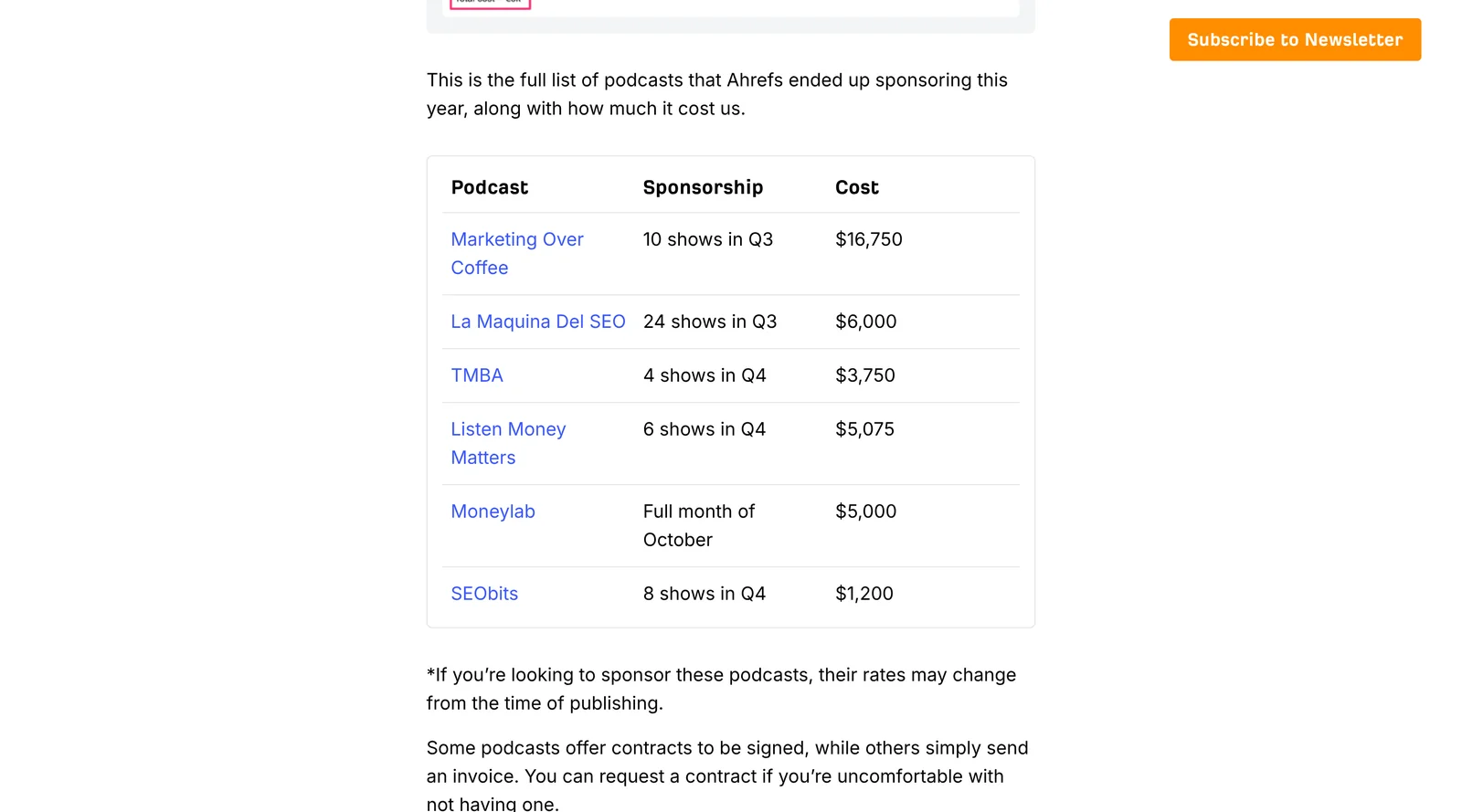
Ahrefs published its numbers in "Podcast Advertising: $51,975 Spent", updated November 21, 2018. Its first attempt cost $14,200 across five podcasts and produced 339 pageviews and 11 trial signups, "almost $1.3k for each trial signup". It concluded that podcast advertising is "a tool for gaining exposure and brand awareness". The article says pricing "can range anywhere from $300 per episode" and that popular shows were "fully booked for the quarter". These prices are eight years old; use them for the shape of the result, not as a quote.
Best for: companies that already convert well and want wider recognition. Not for: a startup measuring every dollar against signups.
SaaS marketing strategies: match the channel to the customer
For a SaaS startup, the right channel depends mostly on what one customer pays per year. Ahrefs uses a model it credits to David Fallame with three acquisition types:
| Type (Ahrefs' terms) | Who Ahrefs says it suits | Channels on this list |
|---|---|---|
| "Spears": direct human involvement, such as sales | SaaS targeting enterprise customers | 1 |
| "Nets": pull in many prospects at once, such as content | SaaS targeting small businesses; customers paying about $100 to $10,000 a year | 4 to 8 |
| "Seeds": the customer base grows on its own | SaaS targeting small businesses or consumers | 2, 3 and the product itself |
The right-hand column is our mapping. Ahrefs says its own customers sit mainly between $1,000 and $10,000 a year, which is why content works for it.
SaaS content marketing: write about problems your product solves
SaaS content marketing works when each article covers a problem the product solves, and it is optional. In its guide to SaaS content marketing (October 12, 2022), Ahrefs answers "Must you do content marketing if you're a SaaS?" with "No."
Three parts of its method transfer to a small team:
- Score topics before writing. Ahrefs gives each topic a "business potential" score and prioritizes those scoring 2 or 3.
- Know the product first. Every new Ahrefs marketing hire works in customer support for three months.
- Promote each piece. "Your content won't get traction on its own."
For topics a new site can win, see our guide to low-competition keywords. To hire the work out instead, compare SaaS and B2B SEO agencies by company stage.
What we left out
We could not open a primary source for these on November 19, 2026, and would rather give no number than repeat someone else's:
- Product Hunt and Reddit launches
- Meta, TikTok, X and Reddit ads
- Email newsletter platforms
- Influencer partnerships, PR, events and review sites
Referral and affiliate programs are not ranked here; our growth loops guide covers their published terms.
Frequently asked questions
What are the most effective marketing strategies for startups?
No single channel is most effective for every startup. Direct outreach, community launches and founder posts have the lowest documented cost and wait. Search ads give the fastest paid signal. Organic search, by Google's own guide, can take several months.
How do you start marketing for a new business?
Start with the channels that cost nothing and answer quickly: write to potential customers directly and show the product to one community that allows it. Set up Search Console and publish pages that answer buyers' questions early; that clock is the longest.
What are the three types of marketing strategies?
There is no single agreed set of three. One model for SaaS, which Ahrefs credits to David Fallame, sorts customer acquisition into "spears" (direct sales work), "nets" (channels such as content that reach many prospects at once) and "seeds" (growth through word of mouth).
What is the key to using marketing strategies successfully?
Judge each channel on its own clock. A search ad can be assessed days after it starts running. Ahrefs suggests revisiting a page that is not in the top 10 after about six months.
Continue with the next task
- Plan the search work this article leaves out: SEO for business
- Listing the product where early adopters look: SaaS directories by cost, review time and link type
- Before paying for traffic, check what you can test: Conversion rate optimization tools and the traffic a test needs
- Pick topics a new site can win: Low-competition keywords
- Turn one channel's output into the next round's input: Growth loops with worked examples
- Once visitors arrive, decide who fixes signup and activation: What a growth engineer does
About this article. Drafted with AI assistance following PolyDraft's blog workflow, fact-checked and edited by separate AI agents, and approved by Vincent Chen. Platform and vendor facts were read on each company's own pages on November 19, 2026. The ten-startup figures are our own measurement, built on DataForSEO estimates. Statements about our own marketing come from PolyDraft's founder. PolyDraft is our product. The screenshots are unedited captures of the linked pages.
Sources
All pages were opened on November 19, 2026.
- Google: SEO Starter Guide, average daily budgets, ad review process, Smart Bidding learning, email sender guidelines
- Hacker News: Show HN guidelines
- LinkedIn Help: Create a LinkedIn Page, newsletters, campaign budgets
- Ahrefs: ranking study (2025), SaaS marketing (2021), SaaS content marketing (2022), podcast advertising (2018)
- PolyDraft: for startups, pricing
- Our own startup site benchmark, measured November 17, 2026 with DataForSEO US estimates; the dataset is not published
- DataForSEO Backlinks index for polydraft.ai, read November 19, 2026